GICNT Fake iGaming Certification: How to check a Сertifier

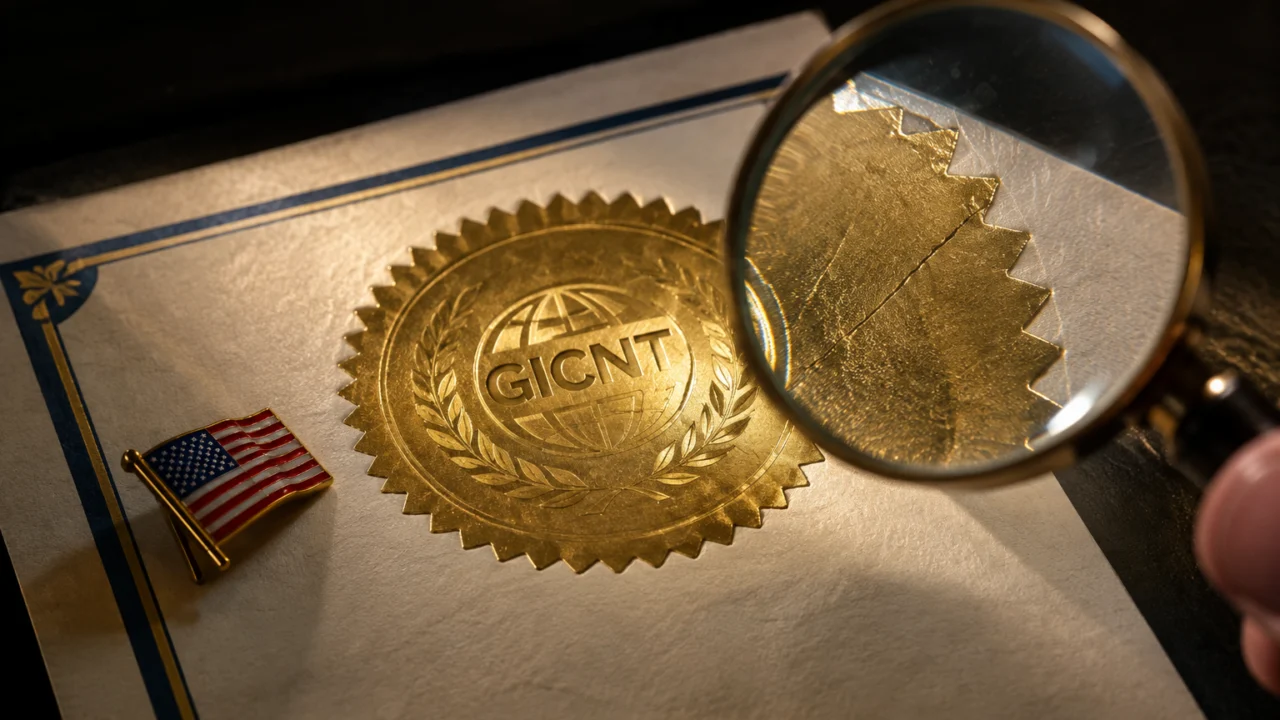
A GICNT fake iGaming certification site now runs on gicnt.org, a domain once tied to a 2006 nuclear security initiative. Here is what the State Department says and how to check any certifier before trusting its logo.
What the domain was
The Global Initiative to Combat Nuclear Terrorism was a partnership launched in 2006 by the United States and Russia to strengthen national defences against the theft, smuggling and sabotage of nuclear material. Over the following years it grew into a multilateral effort involving dozens of countries, with working groups on detection, response and law enforcement. It was paused in 2022.
The web address outlived the programme. The domain gicnt.org kept the old name in circulation. And the initiative's acronym still appears in US government documents as a point of reference. That residual presence gives a new site on the same domain a borrowed air of official weight.
What the site now claims
The domain now presents itself as Global iGaming Compliance and Trust. The new name drops the nuclear wording but still produces the GICNT letters. So anyone who remembers the old initiative sees a familiar acronym.
The homepage also states a founding year, placing the body in the industry's history as an established certifier. A founding date is easy to print and hard to verify, so check it against a registry before relying on it.
The site names industry figures as its leaders and advisers, presenting them as the people behind its standards. Each person named has denied any link to the body. A recognised name beside a certification badge does much of the persuading, so those denials matter as much as the listing. Treat any adviser list as unconfirmed until the person confirms it directly.
How the State Department responded
The State Department told NEXT.io that it "no longer has any affiliation with the domain." According to the same statement, the domain expired in May 2026. The site now running on gicnt.org therefore has no connection to the body the department once referred to. And the government does not vouch for it.
That distinction matters for certification. A logo or acronym that echoes a government programme can look like an endorsement. But nothing in the State Department's account supports one. Unless a current official source says otherwise, treat the claim as unsupported.
Why affiliates cite it
Affiliate pages promoting Australian offshore casinos have started citing the Global iGaming Compliance and Trust body as an authority, presenting its name as proof that a site is approved. The pages rarely explain what the body does or who issued the approval. The name does the work: a reader sees a certifying body and assumes someone checked the operator.
The gap matters because of what an offshore casino is. It holds a licence from a jurisdiction outside the market where its players live. So Australian players are not supervised by their own regulator. A certificate from a body that cannot be verified fills the space where oversight should be.
For compliance staff, the risk runs in one direction. An operator that accepts an affiliate's badge at face value inherits a claim nobody has checked. If the badge proves worthless, the operator is the one explaining why it was displayed.
How to check a certifier
Start with the domain. Run a WHOIS lookup on the certifier's website and read the registrant field, the registrar and the creation and expiry dates. Compare the registrant with the headquarters the certifier claims on its own pages. A body that says it is based in one country but registered its domain to a company elsewhere, or to an address that does not exist, has given you the first reason to stop. Note the expiry date too: a lapsed domain picked up by a new owner is exactly what happened here.
Next, check the licence itself. Search the regulator's public licence register for the operator and for the certifier's name, in the regulator's own database, not in a search engine's cached result. If neither name appears, treat the seal as unverified, whatever the logo looks like. A certifier tests and approves operators, but it is not a regulator, and only a regulator's register can confirm a licence.
Finally, contact every named adviser or leader directly. Use an address you find yourself, from the person's employer page or a professional register, never a link or contact form on the certifier's site. Ask a plain question: did you agree to this role, and are you still in it? Write down the date, the channel and the answer, even if the answer is silence.