Haiti gambling regulator ANJHA: can it tackle organised crime in the borlette market?

Haiti's new gambling regulator ANJHA was created by a 5 October notice. Yet its cash-heavy borlette market and gang control raise hard questions about money laundering. This analysis sets out what the evidence supports and what will test the regulator first.
A new regulator opens a cash-heavy market
The Haitian government created ANJHA through a public notice from the Ministry of Economy and Finance dated 5 October, giving it a mandate to regulate, control and supervise the gambling sector. Its central job is combating financial crime, money laundering and terrorist financing included. The new body takes over from the Loterie de l'État Haïtien (LEH), founded in 1927 and recognised by a 1958 law. That inheritance matters: the state lottery was built for a much smaller, slower market.
Why the risk is high: gangs, FATF and weak enforcement
Gangs are the first part of the problem. The Global Initiative against Transnational Organised Crime estimates that armed groups controlled up to 90% of Port-au-Prince, the capital, where most betting agents, lottery counters and cash collectors operate. A regulator licensing gambling in such a city works where the state's authority is thin and many of the people handling money answer to someone else.
The financial picture is no better. Haiti remains on the FATF grey list, the list of jurisdictions under increased monitoring, which keeps its financial controls under sustained international scrutiny. Sophie Rutenbar of the Global Initiative puts the weakness plainly: laws exist, but enforcement is limited. And the institutions that would check a casino's books or a betting agent's cash are stretched thin.
Published estimates of money laundering volumes are imprecise, according to Rutenbar, so no figure for laundering in gambling is offered here. The narrower point holds: a cash-heavy market, a limited enforcement base and grey-list status together give dirty money easy routes.
The borlette network and the path to legalisation
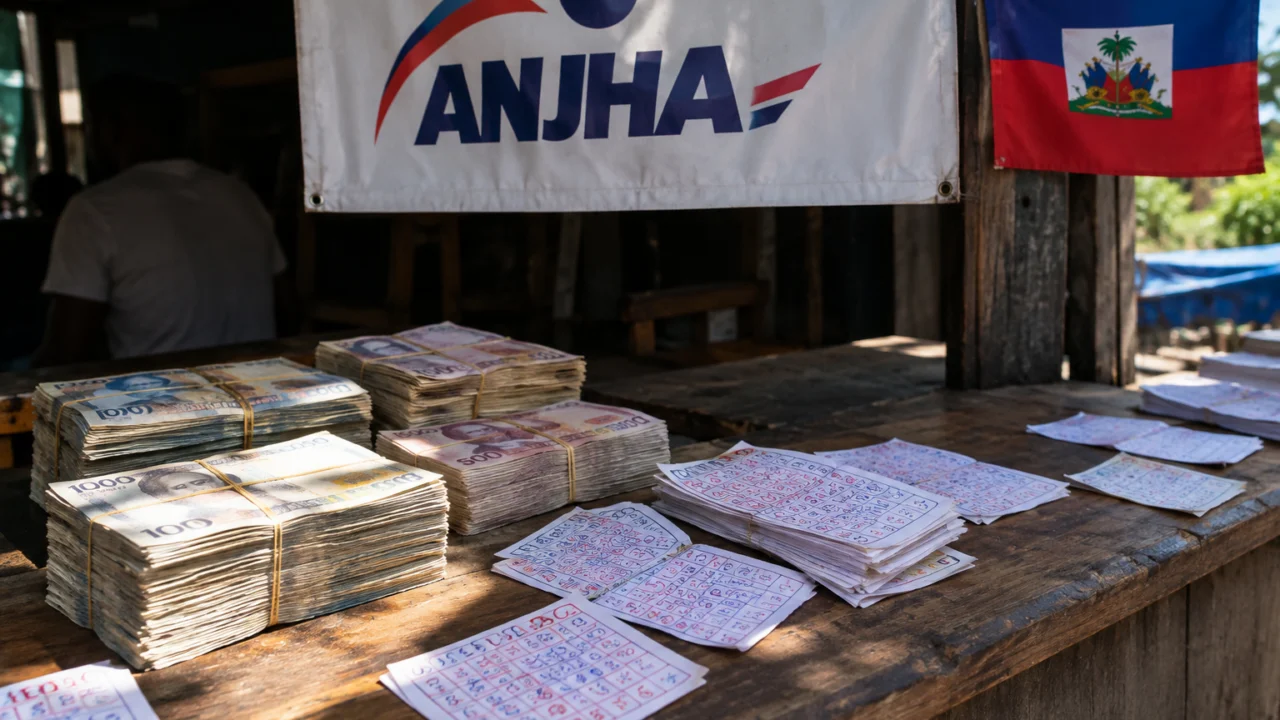
Borlette is an informal lottery that sits deep in Haitian daily life. Its retail base is large, its agents are numerous and largely independent, and most of its transactions are in cash. That combination makes the network hard to map, and it is the first practical problem for ANJHA. An agent who takes a bet outside any licence falls beyond the regulator's reach unless the law gives it a way to bring that agent in.
Migens Guillaume, formerly a manager at Paryaj Milyon and Krezi Paryaj and now at Megapari, takes a cautious view. He argues that the regulator needs time to build its footing. And that borlette should eventually be brought into a regulated market rather than pushed further underground. Prohibition, in his reading, would only hand the trade to criminal groups.
The path he describes is gradual. Licensing the visible operators first, then the agents who depend on them, would let the state see where cash moves before asking anyone to change how they work.
Why foreign capital has not yet followed
Foreign operators have not rushed in. And the experts who follow the market locate the reason in the state rather than in the games. Sophie Rutenbar describes the investment climate as unfavourable and links it directly to limited institutional capacity. In her reading, the laws exist, but enforcement is thin. And a regulator with little reach cannot give a licensed operator the predictability it needs.
Migens Guillaume is more cautious in his optimism. He argues that ANJHA needs time to build credibility. And that bringing the borlette network into a regulated market is the precondition for outside capital to follow.
The two views differ in where they locate the constraint: one in today's institutions, the other in a sequence still to unfold.
What will test ANJHA first
ANJHA's first test is whether it can supervise a market that runs largely on cash. Borlette has a large retail network, many independent agents and heavy cash flows. And the regulator will have to decide how those agents fit into licensing and reporting. A second test is whether Haiti's place on the FATF grey list changes under the new framework. Until ANJHA shows how it handles these two issues, judging its effectiveness against organised crime is premature.
FAQ
Who created ANJHA and when?
ANJHA was created by a public notice from Haiti's Ministry of Economy and Finance dated 5 October. The body regulates, controls and supervises the gambling sector, with combating money laundering and terrorist financing as its main task.
What did ANJHA replace?
ANJHA takes over from the Loterie de l'État Haïtien (LEH), founded in 1927 and recognised by a 1958 law.
Is Haiti on the FATF grey list?
Yes, according to Sophie Rutenbar of the Global Initiative against Transnational Organised Crime, Haiti remains on the FATF grey list of jurisdictions under increased monitoring.
Does ANJHA's budget or legal powers cover borlette agents?
The budget and full powers of ANJHA are not public. So whether the regulator can reach independent borlette agents is an open question. Migens Guillaume of Megapari argues that the borlette network should eventually be brought into a regulated market.