Live Casino Game Shows: What Imagine Live’s Nadiya Attard Says Changes Next

Live casino game shows are gaining ground in Latin America, and suppliers now compete on localisation, blackjack variants and new mechanics. Here is what the Imagine Live CCO says is changing and what operators can act on.
A buyer's market forces faster live casino innovation
Nadiya Attard, Chief Commercial Officer at Imagine Live, says the market is now more of a buyers' market. Operators have more suppliers to choose from, and each one is trying to win a place in the lobby. For a studio, that means new formats have to reach players faster, because a product that looks the same as last year's will simply be skipped.
Live casino is the part of online gaming where a real dealer runs the game from a studio, streamed to the player's screen. Players compare it with a physical table, so every shortcut shows. A roulette wheel that spins slowly or a dealer who hesitates breaks the illusion faster than any graphic flaw in a slot.
Attard links the crowded market to two items moving up the roadmap: AI-driven dealers and new languages. Both cut the cost of reaching more players in more markets, and both give operators a reason to switch suppliers.
Game shows in Latin America: why they keep growing
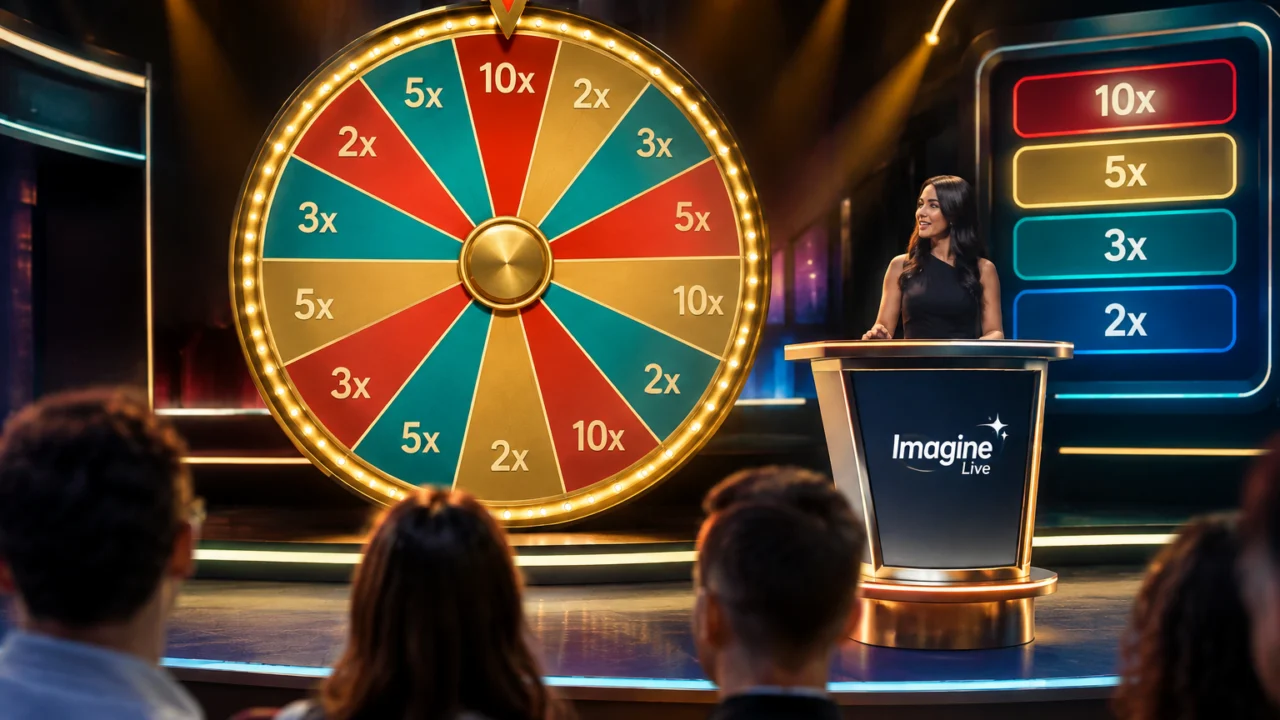
Game shows are live casino formats built around a host, a studio set and a central mechanic, most often a wheel or a multiplier board, rather than a dealer running a standard table. Players bet on an outcome that the show reveals on screen. So the experience sits closer to a television programme than to a blackjack table.
Nadiya Attard, Chief Commercial Officer of Imagine Live, calls game shows "far more interactive than a traditional table." That interactivity is why she names them one of the main growth drivers in Latin America. Players there, she says, respond to hosts who talk to them directly, react to the result and keep the energy up between rounds.
These are the company's own views of its market. The growth picture has not been verified independently, so read the trend as Imagine Live's reading rather than a measured market size.
Still, the direction matches what operators have been testing: formats where the host and the wheel carry the session. And the table is only one of several ways to play.
Localisation: the details players notice
Attard's point is that localisation starts well before the interface text. She says it covers the dealer's dialect and the studio's style, not only the language on the screen. A dealer who sounds like someone from the player's own region makes a table feel familiar within seconds. A dealer using a neutral accent from elsewhere signals that the product was built for someone else.
Her example is a dealer speaking a regional dialect rather than the standard form of the language. The rules and bet buttons can be translated line by line and still feel foreign if the person running the table talks differently from the people the player hears every day. Small things carry the weight: how the dealer greets the table, the pace of the banter, which jokes land and which fall flat.
She also points to the size of the continent as the reason one studio style does not fit every market. Latin America, Europe and Asia differ in humour, formality and how much a player wants the dealer to talk. So a single house manner works in some places and grates in others. For an operator, the localisation brief should cover tone and presenter behaviour, not just a translation file. Ask the studio for dealer casting in each target market, and test the table with local players before launch.
Blackjack and Gen Z: why the classic still holds
Attard treats blackjack as the main live product, and the one operators keep investing in. It is the game most players already know. For her, the classic is not untouched. Change comes through the table format around the rules.
Asked how the classic evolves, Attard cites Ultimate Blackjack. The variant keeps the decisions players already understand while updating the format. So the product feels current without asking anyone to learn a new game.
Whether Gen Z will stay at the blackjack table is still open. The assumption is that younger players want faster, more social formats. A casino can test that directly by comparing new-player retention on blackjack tables and game shows over the same period. And running the same promotion on both.
Regulation and the Brazil shock
Attard uses Brazil as the example of how fast regulation can change the ground under a live casino operator. As she frames it, a market can shift almost overnight. And an operator that built its offer around one country has little room to react.
Her advice is to diversify. Spread content across studios and across games, she suggests.
So that no single product or supplier carries the business when the rules move. A lobby that depends on one flagship table is exposed the moment that market closes to it.
She also respects companies that keep their teams in place through regulatory upheaval. Cutting staff at the first sign of trouble is the easy move. Holding on to dealers, producers and product people while the rules are being rewritten is harder. And Attard counts it in those firms' favour.
The missing layer: slot mechanics in live casino
The last question Nadiya Attard was asked in the interview was what live casino still lacks. Her answer was slot mechanics. Live tables, she said, have no equivalent of the features players know from slots, such as bonus buys. A bonus buy lets a player pay a set price to enter a bonus round immediately, instead of spinning and waiting for the feature to trigger by chance. In slots, it is a direct route to the part of the game that pays out most.
Attard, Chief Commercial Officer of Imagine Live, framed the gap as an opening rather than a complaint. Live dealer games have built their appeal on a real person, a real table and a visible result. Slots built theirs on pace and on control over the moment of the bonus. Attard's point is that the two have not yet met in the middle.
The claim is hers, and it reflects one supplier's view rather than a market measurement. It is still worth taking seriously for anyone running a live lobby. If a bonus buy has no live equivalent, the question for a product team is which slot mechanic can be translated into a table format without breaking the feeling of a live game, and which should stay in slots.
Frequently asked questions
What is a game show in a casino?
A game show is a live casino format where a host runs each round, often with a wheel or board that sets the payout. And players join from their screens. Attard describes these games as far more interactive than a traditional table, because the host's energy and the visible draw keep the round moving.
Why does blackjack stay popular?
Attard treats blackjack as the core of the live product, and its rules are familiar to almost every player. Studios still build on it, with variants such as Ultimate Blackjack, rather than replacing the classic. The live dealer adds the feel of a real table to a game players already understand.
How do you localise live games?
Start with the dealer. A host who speaks the regional dialect sounds local, and players notice quickly when the speech feels borrowed. Then adjust the studio style, including tone, pacing and set design, to what the audience expects. Attard stresses the scale of the market, so plan separate versions for each major region instead of one translated pass.