PAGCOR Restarts the Casino Filipino Sale With a New Adviser Tender: Budget, Deadline and Conditions

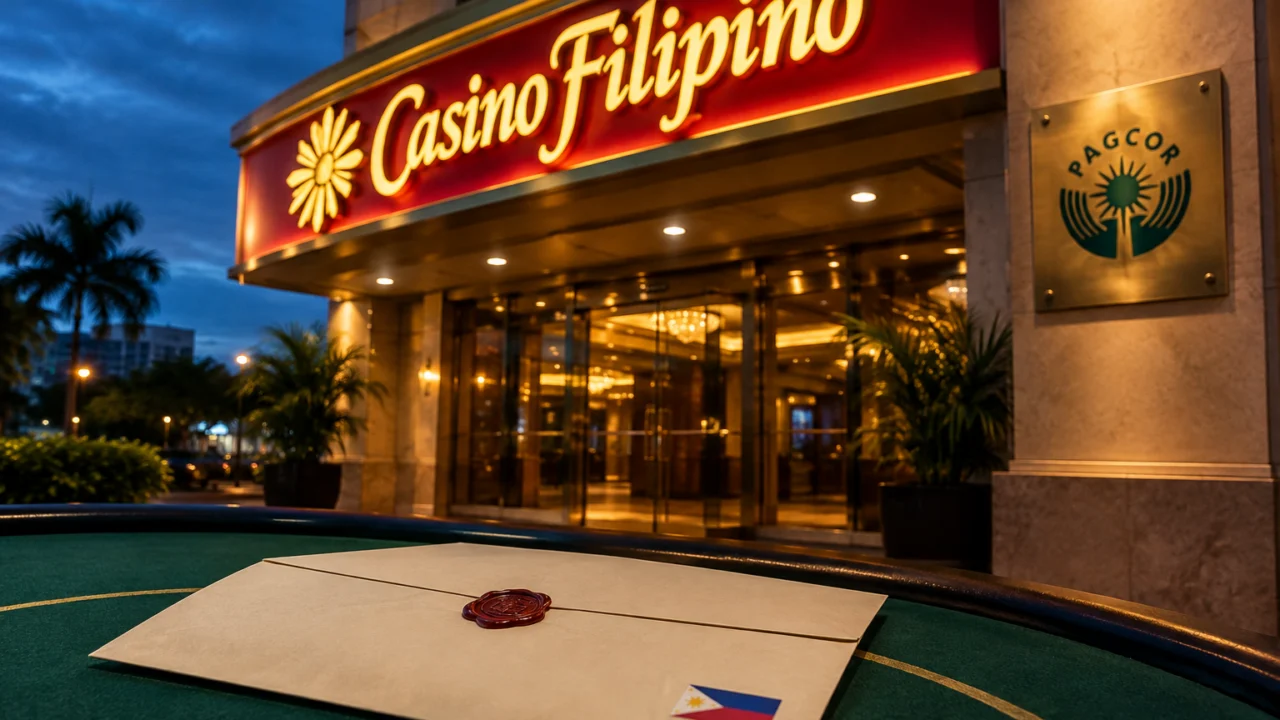
PAGCOR is hiring a new adviser to sell Casino Filipino after the first tender failed.
The article covers the PHP363.33 million budget, the 19 November deadline and the conditions that must be met before any award.
PAGCOR opens a new adviser tender with a PHP363.33 million budget
The agency has opened a new tender for an adviser to prepare the sale of Casino Filipino. The budget for that work is PHP363.33 million, or about $5.7 million. It covers valuation, structuring and running the sale. It excludes the value of the assets, which the adviser will help establish.
Bids are due by 9:00 on 19 November. The tender is a rebid, a second attempt to find an adviser after the first round produced no bidder that met the requirements. For a privatization that has been promised several times since 2017, the timing matters.
Firms must submit complete documents. The first round failed on incomplete submissions.
Why the first tender failed
Three firms bid in the first round, and none passed. The evaluation found document deficiencies in every submission, so no bidder moved forward.
That left PAGCOR with nothing to award.
One bidder asked PAGCOR to reconsider.
The agency rejected that request on 3 November, which closed the only route to contest the findings.
Two days later, on 5 November, PAGCOR formally declared the tender failed. The public notice followed on 12 November, a week after the decision.
The seven-day gap matters for anyone tracking the timeline. Bidders learned the outcome before the public did. The new tender is the agency's answer to that stall.
The money at stake: losses and a 35-casino network
Casino Filipino's losses are growing. In October, PAGCOR chief Alejandro H. Tengco put the operating loss at about PHP7 billion for 2026, up from PHP6 billion in 2025. The PHP1 billion gap is the number a buyer will weigh first.
The network that would change hands is large. It includes 35 casinos. Twelve run under direct PAGCOR management, and 23 operate under revenue-sharing agreements. In those deals, the operator keeps the floor and splits income with its partner. That split matters for valuation. The state's share at the 23 partner sites is not the same as the money booked on its own tables.
Preliminary revenue estimates put the business at PHP20 to 30 billion. That range is a starting point, not a price. The final valuation remains undetermined, and setting it is the adviser's first task.
What the adviser will do within one year
The adviser's first job is to establish what is actually for sale. Casino Filipino is not one clean asset. It runs its own casinos and also operates venues under revenue-sharing deals. In those deals, the property stays with the operator and income is split with a partner. The adviser will assess the business as it stands. Then it will group the assets into units a buyer can evaluate and bid on. That grouping matters. A single lump sale and a set of separate packages draw very different bidders.
Due diligence follows the grouping. It covers the books, leases, revenue-sharing contracts and staffing. The adviser then runs the buyer selection, from first approach to final shortlist, and keeps bidders' questions and disclosures in order.
The last stage is the transfer, moving the assets to the winning buyer. The engagement runs one year from the award, a short window for a sale this size. A stall during diligence would cut into it.
Conditions that must be met before the award
Nothing moves to an award until the legal ground beneath the sale is secure. The first condition is an executive order separating PAGCOR's regulatory and business functions. Today the same agency licenses gaming, sets the rules and runs Casino Filipino as an operator. A buyer of a casino owned by its own regulator would face obvious conflicts. So the adviser's work includes making the assets saleable on clean terms.
Second, the sale needs written approval from the government corporate counsel before it proceeds. It must be in hand before bids are opened, not handled afterward. The counsel's sign-off confirms the deal follows government rules on disposing of state-linked assets.
That approval also protects the award from challenge once a winner is named. Without it, a deal can be reopened. The first tender showed how fast a process stalls when paperwork falls short.
The third condition concerns the workforce. Casino Filipino employees must have their future settled as part of the process, not left for the buyer to sort out later. Staff numbers, transfer or severance terms, and how those obligations pass to a new owner all need defining before the award. Buyers price labor liabilities into their offers, so an unresolved employment question either lowers bids or drives serious candidates away.
Taken together, these conditions set the real timetable. The tender deadline matters less than whether the regulatory split, legal sign-off and staffing plan are complete. Investors should treat those three items as the gating events.