Plinko Game Reinvented: How PlinkoX’s Multiplier Ball Won Brazil

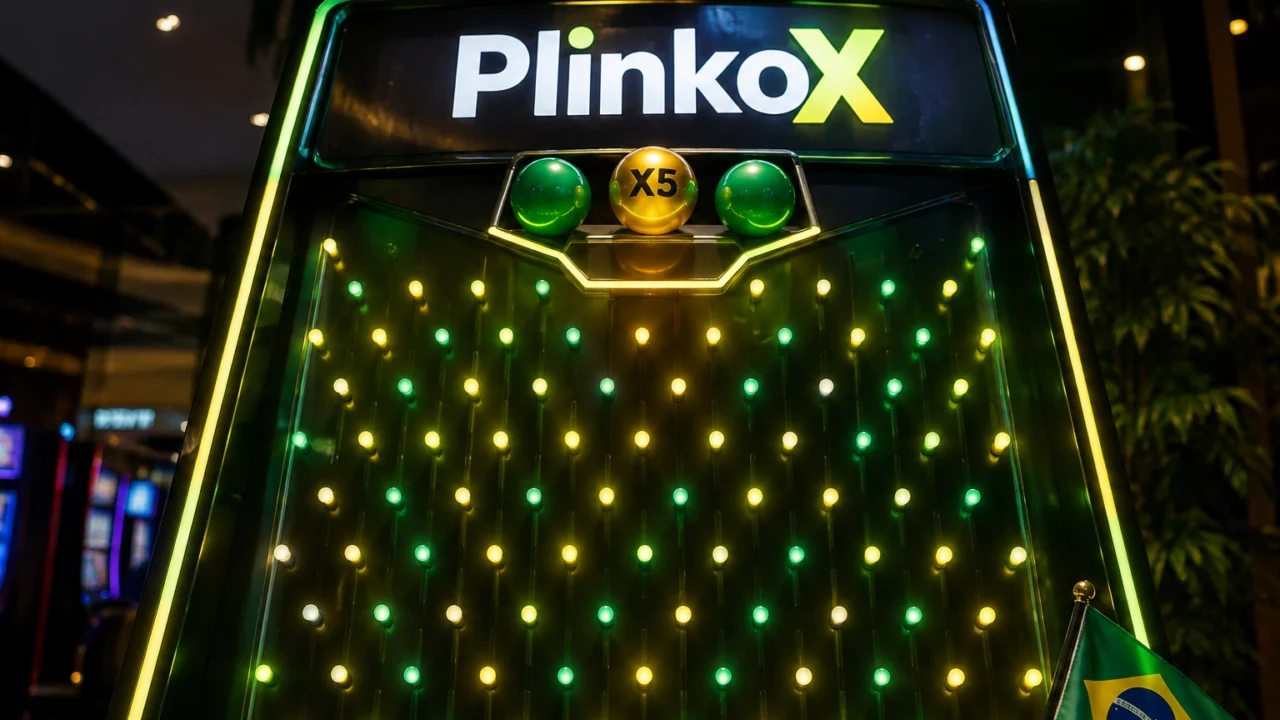
The Plinko game PlinkoX lets players pick a 1x, 5x or 10x ball before every drop. And it held the top spot among Brazilian casino brands for eleven months. Here is what changed and why it matters for operators choosing games for their lobbies.
Why a familiar Plinko game still needed a change
Many operators treat a familiar game as a finished one. Plinko has been in casino lobbies for years. Its rules fit in a single sentence. Players already know what they get, so operators assume there is nothing to change. The result is a crowded shelf of near-identical boards. Only the logo tells one title from another. Operators who want a game to stand out often spend on promotion and leave the product untouched.
Luka Kobalia, Chief Product Officer at SmartSoft, locates the problem in the product itself. Most Plinko titles, he argues, offer the same experience: "same board, same drop, same result." A player who has seen one version has effectively seen them all.
Players have no reason to leave a known game for one that plays the same way. Recognition gets a game tried once. It does not get it played again.
His core claim is short: "familiar doesn't mean finished." Familiarity lowers the barrier to a first session, which is valuable. But it says nothing about why someone should come back on the third or tenth day. A format copied across dozens of studios still has room for a decision that changes what each round means to the player. In Kobalia's view, that gap is where a real upgrade to Plinko begins. And it is the gap PlinkoX was built to fill.
One choice before the drop
The player's first decision comes before the ball leaves the top of the board. In PlinkoX, that decision is the choice of a multiplier ball: 1x, 5x or 10x. The choice sets the highest payout the stake can reach. So the same bet on the same board can end at very different values.
Kobalia puts the principle in one line: "every drop starts with a decision." The sentence describes more than a feature list. A classic Plinko drop is random from start to finish, and the player only watches. Here the player chooses the ball first and owns that choice before anything falls.
| Ball | What it gives the player |
|---|---|
| 1x | Standard multiplier: the stake pays at base value |
| 5x | Five times the base payout on the same stake |
| 10x | Ten times the base payout on the same stake |
The three options differ in one variable only. The board, the drop and the stake stay the same. A player can compare the balls directly. Each step up raises the multiplier, and the number shows before the player commits.
For an operator, that narrow control is the point. The decision sits in one choice made before each round. A new player can read the labels and grasp the trade-off at once. The choice needs no tutorial. The player picks a number and presses play. That is enough to change what the round means.
Keeping the game simple
"A player who has seen Plinko once can play PlinkoX straight away," Luka Kobalia, Chief Product Officer at SmartSoft, says in the interview. That is the test the team set for the game. The learning curve stays flat because the rules a newcomer already knows still apply. The ball drops through the pegs and lands in a slot. The slot sets the payout.
Nothing about the board changes. What differs is the ball. Its behaviour follows the physics Kobalia describes. So each drop reads as a fall the player can follow with the eye, not as a scripted animation.
The new element sits in one decision made before the drop. It does not sit in the geometry of the board. A player who knows the old game learns only one new thing: which ball to pick.
Two features handle pace. Turbo shortens the time between drops, so a session covers more rounds in the same stretch of time. Auto Play runs the drops without a click for each one. It suits a player who has already chosen a ball and wants to watch the results come in. Turbo changes how quickly the player reaches the next result. Auto Play changes how much attention each result needs. Neither alters the rules of the drop, so neither asks the player to relearn anything.
Brazil: eleven months at the top
Blask, as SmartSoft cited it in its interview with iGaming Expert, counted PlinkoX on 83 Brazilian brands in April 2026. The closest rival was on 65. Kobalia presented those figures as the start of the lead, not as a one-off peak.
By September 2026, the same tracker put PlinkoX on 65 brands and the nearest competitor on 47. The gap is 18 brands in both snapshots, so the lead did not narrow over the period. Kobalia dates the run to November 2025, which makes it eleven months at the top of the Brazilian lobby count.
| Snapshot | PlinkoX | Closest rival | Gap |
|---|---|---|---|
| April 2026 | 83 | 65 | 18 |
| September 2026 | 65 | 47 | 18 |
Two things matter about these numbers. First, a brand count measures distribution, not player activity. A game listed on 83 sites can still be played less than a game on 65 sites with bigger traffic. Second, both snapshots come from the same tracker, so the comparison is consistent. Operators should read the table as evidence of demand from other operators, not as proof that players prefer the game.
His point is that operators kept adding the game through a period when the market was not standing still. Brazil's regulated market has changed in both licensing and promotion rules over the same months. So a game that stays on 65 or more brands in that environment has passed a practical test. The drop from 83 to 65 shows that brand counts move. A lead on a list has to be defended, not assumed.
What operators can take from it
Kobalia's first point is the least comfortable one: "familiar doesn't mean finished." Operators tend to treat a proven title as a fixed asset. So it gets a seasonal refresh and nothing more. Instead, take one game that already performs and ask what a player would change if they could. Then ship one real change, not a cosmetic one. For PlinkoX, that change was the multiplier ball, a decision the player makes before the drop.
The second lesson is that localisation is part of the product. A game can work in one market and stall in another for reasons unrelated to its maths. Language, payment habits and how players read a multiplier all play a part.
Brazil's result shows how much this can move distribution. According to Blask, as reported by SmartSoft, 83 brands carried the game in April 2026. It also held the top position for eleven months. Treating a new market as a translation job leaves that kind of gain on the table.
The third lesson is to measure from day one. Waiting for a quarterly review to learn whether a game is travelling is too slow. Count how many brands carry the title each month. Set that count against the changes you shipped and the markets you entered. Brazil's numbers are useful because they come as a monthly series. They show 83 brands in April 2026 and 65 in September. A drop of that size shows up in a monthly count long before it shows up in revenue. So an operator watching the count can act while there is still time.
Common questions about PlinkoX
What is a multiplier ball?
In PlinkoX, the player picks the ball before the drop. Each ball carries a value of 1x, 5x or 10x. That value sets how many times the win exceeds the stake. A 1x ball returns the stake unchanged, a 5x ball multiplies the win five times, and a 10x ball ten times. The choice comes before the ball falls, so it is part of the round itself.
Why did Brazil take to the game?
Kobalia gave no separate explanation for the Brazilian response, so the clearest evidence is the distribution figure. According to Blask, as SmartSoft reported, 83 brands offered PlinkoX in Brazil in April 2026, and 65 in September. The game held the top position there for eleven months.
Reach or mechanics: which matters more?
Kobalia's argument is about mechanics. Most Plinko games use the same board, the same drop and the same result. So a player who has tried one gains nothing from another. The brand count points to distribution. 83 operators listing a game in one market is a strong sign that it reached the lobbies. But a listing shows who chose the game, not why players kept playing it. The changed mechanic explains the reason to stay, and reach shows the game got in front of players. Reach alone would only mean more copies of the same game, so the two should be weighed together.