Mexico Gambling Law Overhaul: Draft Bill Replaces 1947 Statute as Betting Tax Hits 50%

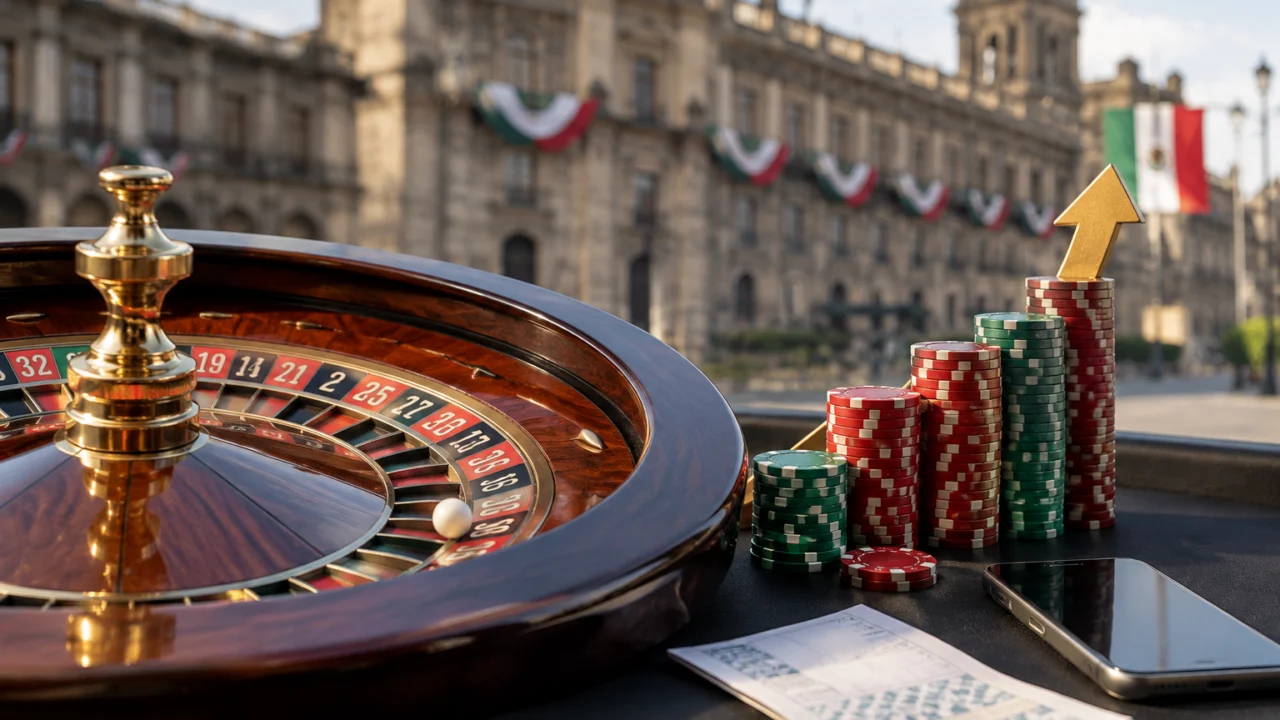
Mexico's gambling law overhaul would replace a statute dating from 1947 with a draft covering online betting, casinos and advertising. Here is what is reported so far and what the 50% tax means for licensed operators.
What President Sheinbaum announced at the National Palace
Claudia Sheinbaum announced the overhaul at the National Palace, according to operator reporting on the press conference. The president said Interior Secretary Rosa Icela Rodríguez will publish the draft bill. It would replace the framework that has governed gambling since 1947. As described, its scope covers four areas: online sports betting, casinos, advertising and consumer protection. Advertising has drawn the most attention from operators. The debate over World Cup betting promotions helped push the government toward a full rewrite rather than piecemeal amendments. Nobody has published the text yet. We still do not know the detailed rules for each area.
Why the 1947 Federal Law on Games and Lotteries is being replaced
The Ley Federal de Juegos y Sorteos dates from 1947, roughly eight decades ago. It was written for a gambling market that looks little like today's. Betting now happens on phones and across borders. Advertising reaches millions of fans in a single evening. For years the statute was the framework everyone worked within, even as practice moved far beyond it.
After a reversal in 2025, the path to replacement opened. Motions filed that year challenged the existing arrangement. When those motions were rejected, the government could write new rules rather than patch the old ones.
The draft takes that outcome as its starting point.
Advertising was the immediate trigger. Betting promotions around the World Cup exposed the gap between the old statute and current practice. Regulators could see how far operator marketing had outrun rules written in the 1940s.
How licensing works today under SEGOB and Article 85
Under the current framework, the Secretaría de Gobernación (SEGOB) issues federal permits for games of chance. No casino or betting operator can run lawfully without one. The permits sit within the 1947 Ley Federal de Juegos y Sorteos, which was written for land-based venues and state lotteries, not smartphones.
Online betting is handled differently. It operates under Article 85 of the current framework, which is where most of the legal friction now sits. Operators argue the article gives them a workable path to licensed activity. Critics say it leaves enough room for offshore sites to market themselves to Mexican players without a local permit.
Operator material puts the licensed universe at 37 permit holders, 420 casinos and 137 online brands. Nobody has checked these numbers against the public SEGOB register, so treat them as provisional.
The 50% special tax and the black-market warning from licensed operators
The special tax on production and services, known as IEPS, rose on betting from 30% to 50% in January 2026. Operator material says Congress approved the increase in October 2025. That date still needs checking against the official gazette and the Finance Ministry's (SHCP) publications.
For licensed operators, the problem is price. The tax falls on every licensed bet, while sites outside the permit system carry no such charge.
Licensed operators warn that this gap lets unlicensed platforms offer better odds, bigger bonuses or lower prices, drawing the most price-sensitive customers toward them.
Their warning goes beyond tax. Codere Online's Aviv Sher puts the marketing side bluntly: "Less marketing means less visibility for regulated platforms." If advertising rules tighten while the tax rises, licensed brands lose both the margin to compete on price and the channels to reach players. Unlicensed sites keep both.
Operators are not simply asking for the rate to be dropped. The question for the draft is whether the 50% rate comes with measures that narrow the black-market gap, such as enforcement against unlicensed sites. Without them, the tax risks pushing players toward the sites the new law is meant to control.
What the draft must settle for licensed operators and suppliers
Three questions will decide whether the draft helps licensed operators or simply reshapes the market around them. The first is scope. If online casinos and online sports betting sit under one licensing regime, a single permit can cover both. Suppliers can also certify their platforms once rather than twice. If the draft splits them, operators will need separate approvals, separate compliance teams and possibly separate tax treatment on top of the 50% rate.
Advertising is the second test, and the one operators care about most. Aviv Sher of Codere Online put the concern plainly: "Less marketing means less visibility for regulated platforms." Licensed brands already compete against unlicensed sites that face no comparable limits. The draft will show how far regulated platforms may promote themselves, through which channels and under which age and consumer protection conditions. Tight rules on the regulated side with no equivalent pressure on offshore sites would widen the gap the industry is warning about.
The third point is the licensing route for online operators. Suppliers will read that section first, because it determines who can sell into Mexico and when. A clear, published process with defined timelines would let them plan launches. A discretionary process would not.