Las Vegas Grand Prix Delivers $800M, but Impact Is Settling Lower

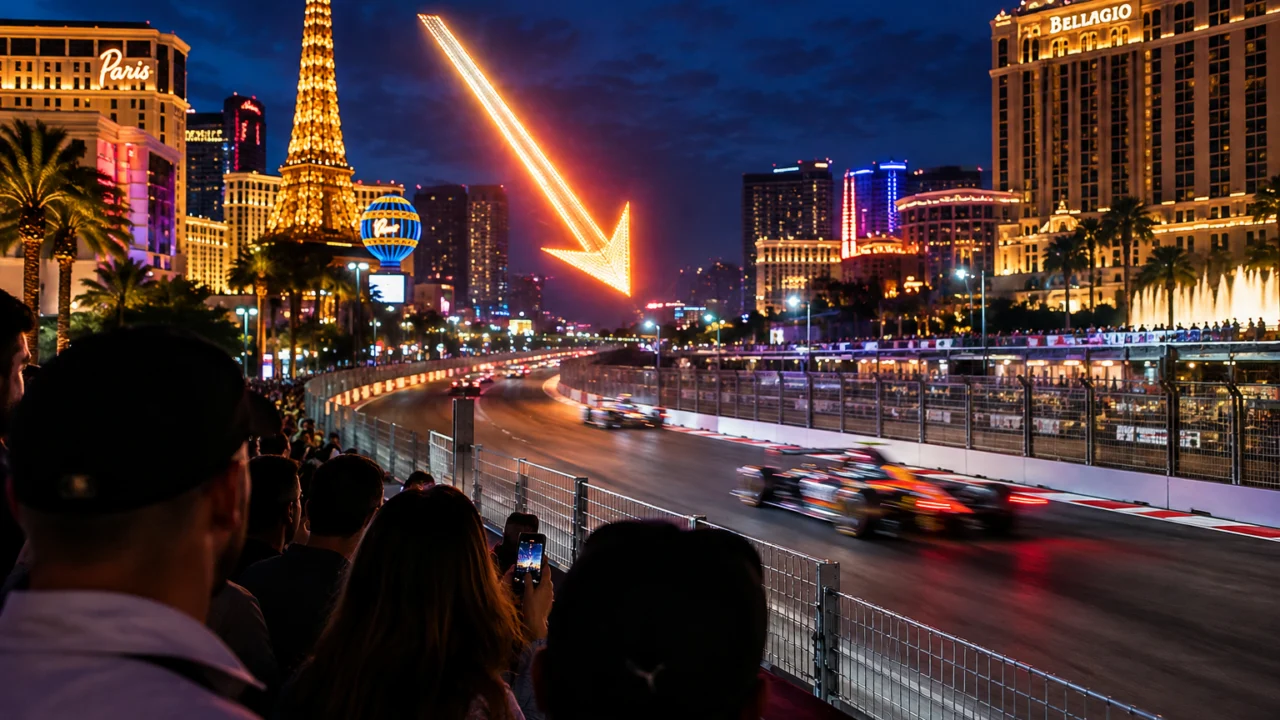
How much money does the Las Vegas Grand Prix really put into the city, and is that figure still growing? The Las Vegas Convention and Visitors Authority (LVCVA) estimates $800 million in economic impact for the 2026 race, down from $934 million in 2024 and well below the 2023 peak.
The 2026 race brought an estimated $800 million to Las Vegas
Max Verstappen won the 2026 Las Vegas Grand Prix, his third victory on the Strip. And the race drew fans from across the United States and abroad to a city that has relied on major events to fill its hotels. Steve Hill, president and CEO of the LVCVA, put the event's economic impact at an estimated $800 million.
That figure is a spending estimate, not the race's profit. Economic impact counts money spent locally because of the event, including hotel rooms, meals, tickets, transport and shopping. It also counts money visitors might have spent elsewhere in town anyway.
The 2026 number in context: $1.5 billion, $934 million, and about $766 million
Reports put the 2023 inaugural race at $1.5 billion. That total included one-off costs of building the circuit. Construction outlays do not recur, so that number overstates what a normal year delivers.
In 2024, the race generated $934 million, according to Applied Analysis data prepared for the LVCVA. That is still a large sum. It sits well below the inaugural total.
The LVCVA's combined estimate for all three races is $3.2 billion. Subtract the 2023 and 2024 figures and the remainder is about $766 million for 2025. Set beside the $800 million estimate for 2026, the pattern is clear. Once construction spending drops out, each year's race lands in the high hundreds of millions rather than above $1 billion.
Why the economic impact is shrinking
Hill attributes the lower figure to efficiency in how F1 spending is managed, not to any loss of the race's value. Much of the gap comes down to what the numbers include. The $1.5 billion recorded in 2023 contained one-off construction costs. Most of the budget now goes to operations that repeat every year. So each dollar of race spending produces less of the one-time boost that construction once added.
Why the city needs the race: falling air traffic and visitor numbers
Las Vegas arrived at the 2026 race with fewer visitors than a year earlier. International air traffic fell more than 7% in 2025 and is down a further 6% through September 2026. Overall visitor traffic dropped 6% in 2025 and has fallen another 7% so far in 2026. A single event that can fill hotel rooms and flights within a few days helps offset that slide. It will not reverse a multi-year decline on its own. That is why the LVCVA tracks the race so closely.
Timing: the race fills the weeks before Thanksgiving
The race lands in November, a stretch Las Vegas has never filled easily. Hotels and restaurants usually run slow in the weeks before Thanksgiving. A weekend of sold-out rooms and packed casino floors adds revenue, and it also fills capacity that would otherwise sit empty. For local business owners, the payoff is largest because the event arrives in a quiet season.
Contract and logistics: racing through 2037 and faster setup
Formula 1 is contracted to race in Las Vegas through 2037, giving the LVCVA and race promoters a long runway to plan. That stability matters for a city that has to commit hotel inventory, transit and street closures well in advance.
The logistics have changed too. Building the circuit took nine months in 2023, tying up the Strip corridor for most of a year. By the most recent cycle, construction had been compressed to 11 weeks. Dismantling the track takes five weeks after the race, which shortens the disruption to nearby streets and businesses.