BETEAST’s Swansea Sponsorship Case Shows Why Betting Brands Hide Behind Licences

BETEAST's Swansea sponsorship and the South Korean investigation into its alleged network show why a betting licence alone does not settle who is accountable for a brand's partners. This compliance analysis sets out white-label structures, the TGP Europe history and expert views on intermediaries.
Who answers when a betting brand is linked to illegal activity?
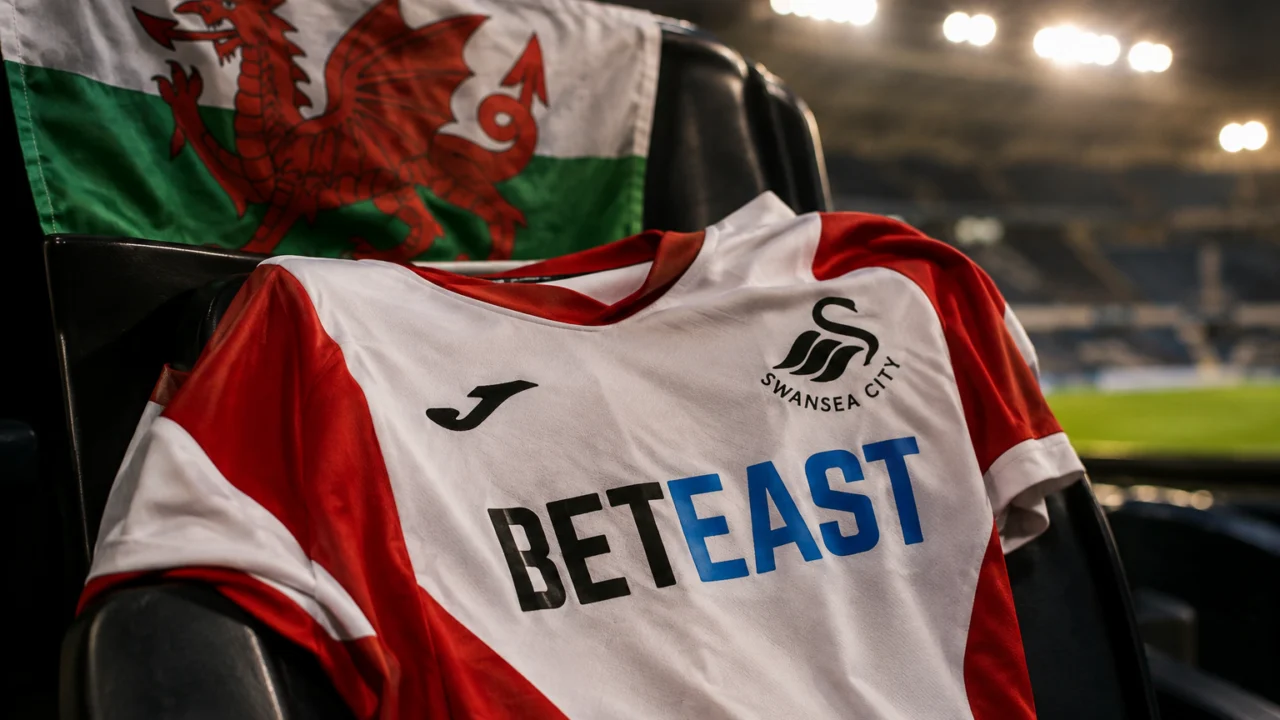
BETEAST was Swansea City's principal shirt sponsor for the 2016-17 season, according to the club's statement. Years later, South Korean investigators linked the brand to an alleged illegal betting network with combined turnover of about KRW3.1 trillion (US$2.3 billion), according to reporting on the investigation. A licence sits on paper, but the brand is only the public face. The question this article asks is simple. When a licence is in place, who answers for the partners, platforms and payment channels behind the name?
The brand and its history
When BETEAST announced its Swansea sponsorship in 2016, the brand tied the partnership to a new website developed with TGP Europe, aimed particularly at UK customers. The deal was presented as a step in European expansion. It put BETEAST in front of a football audience that most offshore operators never reach.
Later reporting described the company as based in Costa Rica. Its licences came from two very different places, Curaçao and the First Cagayan Leisure and Resort Corporation in the Philippines.
The UK-facing website ran on TGP Europe's platform. The main website, by contrast, offered services in English, Chinese and Korean. The brand was built to serve several markets at once. And its technology and customer-facing name were not necessarily in the same place.
What white-label means in practice
White-label is a simple idea with a complicated legal result. A business sells gambling under its own brand while another company runs the platform that takes the bets, sets the odds and holds the customer accounts. The customer sees one name on the website and one logo on the shirt. Behind it, the software, the licence and the payment flows may belong to different firms. The brand, platform, licence and payments can sit in three or more separate legal entities, each registered in a different jurisdiction. A licence issued in one country can cover a website aimed at customers in another. And that gap is where accountability gets lost. The hardest link to trace is beneficial ownership, meaning the real person who controls a company. Shareholder registers often show a nominee or another corporate entity. When that chain runs through several markets, the controlling individual can sit several steps removed from any regulator's file.
Experts on accountability across jurisdictions
Diane Mullenex and Jeremie Kanter start from a point many compliance teams resist. A structure spread across several jurisdictions is not suspicious in itself. Operators split licensing, technology and marketing for ordinary commercial reasons. The real test is whether the whole arrangement operates as one coherent business. A brand licensed in one country, run on a platform in another and paid through a third is not a problem on its own.
Warning signs are more specific. Compliance staff should ask whether the entities share management, staff, technology and money flows. When those links are cut without a clear commercial purpose, the separation itself becomes the signal.
Side by side, the contrast is easy to see. A legitimate split gives the brand a licence it can answer for, and a platform provider bound by contract. A regulator can also see who controls customer funds. A split built to stop the regulator seeing that control looks similar on paper. The licence holder exists, but the people moving the money sit where the authorities cannot easily follow them.
Why TGP Europe's history matters, and what it does not prove
TGP Europe's own record is the part of this story that compliance teams can check. In May 2025 the UK Gambling Commission announced that the company had surrendered its British operating licence after being told of a £3.3 million penalty. The regulator's findings concerned due diligence on partners, meaning how carefully the operator vetted the businesses it worked with. That is the lesson for anyone running a white-label arrangement. A licence protects the holder only as far as its partner checks hold up.
The link to South Korea is a different matter. The earlier arrangements, including the UK-facing website on TGP Europe's platform, do not establish that TGP Europe was involved in the criminal operation now under investigation. Nor do they show that the company knew of, or facilitated, any alleged illegal activity. Readers should keep the two threads apart. A regulatory finding about partner checks is one fact. An alleged criminal network is another, and the public record does not join them.
The intermediary problem: junkets and affiliates
Andrew Klebanow puts the duties plainly. "The primary duty of the casino operator is to provide an honest game where a customer can place a bet and pay the customer should they win," he says. Regulators check game integrity and whether an operator remains fit to hold its licence, while banks and governments watch money moving across their borders. Each party has a defined job, and none of them is the whole picture.
The trouble starts when something breaks. "What happens when these systems fail?" Klebanow asks. "They point to the regulator who in turn points to the casino operator." That loop is why junkets and affiliates matter so much. They sit between the licence holder and the customer, where nobody is clearly watching.
Three questions follow for compliance teams. How far should a platform provider look at the brands it serves? What does a licence holder owe when a commercial partner targets customers in markets where online betting is prohibited? How should banks and payment providers flag suspicious transactions when the business behind them operates overseas? Answering them means looking past the licence certificate to who is actually bringing in players and moving the money.
Licensing is no longer enough
A licence shows that a regulator approved one entity at one point in time. It says little about the network built around that entity. Mullenex and Kanter push the analysis from the single licence to the whole group, asking who receives the money, who holds the customer relationship and who builds the technology.
The UNODC's 2024 report on cyber-enabled fraud and underground banking in Southeast Asia is a reminder of where money can move out of sight, far from the entity named on a licence. Any operator working across borders should assume the same routes are open to people who want to hide a business.
For operators, the test is practical. Map every entity that touches a customer, a payment or a piece of technology.
Then name one person who answers for each of them. If no one can be named, the licence is covering a gap rather than describing a structure.