Slot Mechanics Must Earn Their Place: Why Feature Counts Mislead Studios, Producers and Affiliates


Big Time Gaming's CEO argues that slot studios add mechanics because a promo sheet looks better, not because the game plays better. Here is a practical test for judging whether a mechanic makes players feel or decide.
The common mistake: counting features instead of play
Studios often add a mechanic because it fills a line on a promo sheet, not because the game needs it. The cost shows up after launch: a feature that looked like a selling point is often forgotten within a week, because it never changed a single decision at the reels. In his column of 12 November 2026, Nik Robinson, CEO of Big Time Gaming, sets the test: a mechanic is justified only if it makes the player feel something or decide something.
A promo sheet is the list of features a studio or operator uses to market a game, such as free spins, multipliers, buy options and bonus rounds. Each item is a line in a table. The format rewards quantity, since a longer list reads as more value. And says nothing about how the game plays from the tenth spin onward.
What Megaways in Bonanza shows about mechanics
Megaways is a mechanic in which the number of symbols on each reel changes on every spin. The reels grow and shrink at random, so the total number of ways to win shifts from one spin to the next. That is what separates it from a fixed grid of five reels with three symbols each.
Bonanza, launched by Big Time Gaming in 2016, offered 117,649 ways to win. The figure is large, and it is easy to read it as the design goal.
Nik Robinson argues the order was reversed: the number grew out of the reel mechanic, not the other way round. The team built a reel that behaved unpredictably, and the ways-to-win count was what that behaviour produced.
That distinction matters. The reel shape gave players a feeling of surprise on every spin, a sense that the next layout could be anything. A promo sheet could list 117,649 ways, but the list could not create that feeling. The number meant nothing to players until they watched the reels land.
Decision over decoration: the gamble wheel before free spins
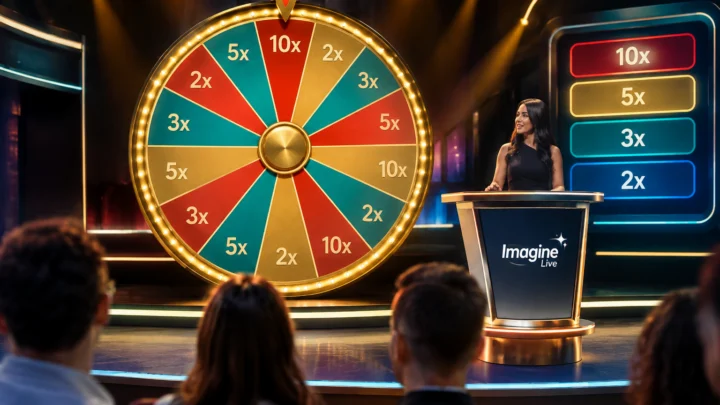
The gamble wheel is the clearest case of a mechanic that asks something of the player. Before free spins begin, the player decides whether to risk a win for a chance at more. The choice carries a real stake, and the wheel makes that risk visible before the next reel turns. The free spins that follow are the reward for having taken it.
A passive extra does not create that kind of engagement. A bonus that simply triggers happens to the player. A decision makes the player part of the outcome. Robinson's column makes this point: mechanics earn their place when they make players decide.
For producers, the test is simple. Remove the mechanic and ask whether any decision changes. If the player would press the same button and face the same screen, the mechanic is decoration. If removing it changes what the player chooses, the mechanic has a job to do.
Why lobbies and affiliate tables reward feature lists
A game lobby is a database with a search bar. Operators sort titles by tags such as free spins, hold and spin, cascades or gamble. And players filter by the tags they remember. A studio that wants its game to appear in those filters has a simple incentive: add the tag. Improving the core loop, the thing a player feels on the fortieth spin, does not move a game up any list.
Affiliates face the same pressure, with less patience. A comparison table needs columns, and the easiest column to fill is a feature count. A slot with eight mechanics outranks one with three, even when the three-mechanic game is the one players keep returning to. The affiliate is not being cynical. The table answers what readers ask for, and it is often built from a promo sheet written before anyone played the game.
Robinson's point is that this loop rewards the wrong work. Once feature count becomes the currency, mechanics get added because they can be listed, not because they change what the player decides.
FAQ
What should I consider in "The common mistake: counting features instead of play"?
See the section above. It covers this point.
What should I consider in "What Megaways in Bonanza shows about mechanics"?
See the section above. It covers this point.
What should I consider in "Decision over decoration: the gamble wheel before free spins"?
See the section above. It covers this point.
Volatility, hit rate and pacing: what feature lists hide
Volatility is the measure of how often a slot pays and how big those payouts tend to be. A low-volatility game returns small wins regularly, so the balance drifts slowly. A high-volatility game can go dozens of spins with nothing, then land a large prize that changes the session. Two games with identical feature lists can feel like different products for exactly this reason.
Hit rate is the share of spins that produce any win at all. A game with a high hit rate keeps the screen moving, even when most of those wins are smaller than the stake. A low hit rate makes each win feel rare and each dead spin feel longer. Neither number is good or bad in itself. It sets the rhythm the player lives with.
Pacing describes how quickly a game moves between wins, bonus triggers and dead spins. Two slots with the same hit rate can feel different if one clusters its bonus features tightly and the other spreads them out. Pacing decides whether a player feels momentum or waiting.
None of the three appears in a feature list. A promo sheet can say "Megaways, free spins, gamble wheel" and say nothing about how often the reels pay or how long a bonus takes to arrive. Those numbers sit in the math model and in the player's experience, which is why a feature list cannot describe how a game plays.
One strong idea and a game's character
A mechanic earns its place when it makes the player feel something or decide something. By that test, a tenth mechanic adds little if the first nine do not work together. Nine features that pull in different directions produce a game with no character, however long the promo sheet looks.
Before the next feature goes into a design document, a producer should write down the one idea the game is built on, in a single sentence. Then every proposed mechanic gets checked against that sentence. If a feature makes the core idea clearer, it stays. If it only adds a number to the feature list, it goes.