South Korea Online Gambling Crackdown: 6,310 Arrested and $116 Million Frozen

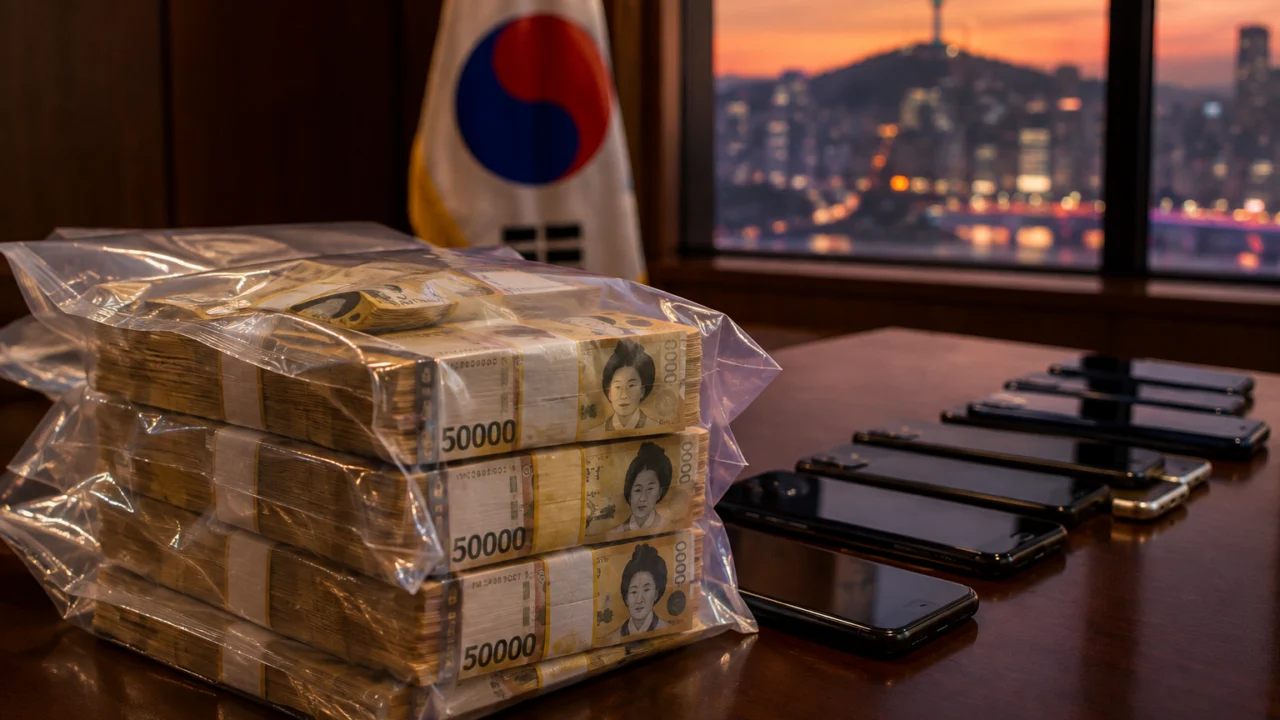
South Korean police arrested 6,310 suspects and froze KRW154.8 billion (US$115.9 million) in a year-long illegal online gambling crackdown. Operators and compliance teams need the figures. They also need the targets. And they need the reasons illegal sites keep coming back.
The headline numbers from the National Investigation Headquarters
Over the course of a year-long nationwide crackdown on illegal online gambling, South Korean police arrested 6,310 suspects. Of those, 316 were held in custody. The arrests were tied to 4,648 cases opened between 1 November 2025 and 31 October 2026. The National Investigation Headquarters of the Korean National Police Agency announced the results on 19 November 2026.
The money side was just as significant. Authorities froze KRW154.8 billion, roughly US$115.9 million, in suspected criminal proceeds. For operators and affiliates watching the Korean market, the size of the freeze matters as much as the arrest count.
Who police went after: site builders, suppliers and platforms
Investigators sorted suspects by their role in the chain, and site builders came first. These were the people who designed and launched illegal gambling websites. Police treated them as the starting point of each operation.
The second group was the suppliers. Police targeted those who sold live casino video feeds and in-game credit services, pursuing them as links in the chain rather than only as the site owners' helpers. The logic is practical: one supplier can serve dozens of sites, so removing a single vendor cuts off many operators at once.
Gambling platforms that powered several sites at the same time formed the third target. A single back-end platform can run a network of branded domains, each looking like an independent operator to a player. Taking down the platform disrupted every site it supported, which is why investigators gave it particular attention.
Together, these three groups show that the crackdown aimed at the infrastructure, not only at the storefronts players could see.
Why illegal sites keep reappearing
One gambling platform often ran several sites at once. Police could shut down a single domain, but the platform behind it kept working. And the operator could point a new address at the same back end. Closing the storefront did little when the engine, payment routing and player accounts stayed intact.
That is why enforcement has moved toward shared infrastructure. Targeting platform builders and suppliers of live video and game credits cuts the supply chain that lets a new site launch quickly.
Without a working platform and a feed of live tables, a replacement domain has little to offer players.
For operators and affiliates, the practical lesson is to track who supplies the platform and the video, not only which domain is live. A site that changes its name but keeps the same platform, provider or payment links is still the same business. Those links are the signal worth monitoring.
Key terms: pre-indictment orders, KRW and live video feeds
A pre-indictment order preserves suspected assets before charges are filed. It is the tool that let investigators secure funds while cases were still being built. So some of the money was held under these orders rather than seized after conviction.
KRW is the symbol for the South Korean won. The freeze was reported as KRW154.8 billion, equal to US$115.9 million at the reporting rate.
Readers comparing the two figures should treat the won amount as the primary one.
Live casino video feeds are streamed tables filmed in a studio, with a live dealer and real-time betting.
Illegal sites did not always produce these feeds themselves. Third-party suppliers provided them, which is why police looked beyond the sites to the companies behind them.
Timeline and who reported the figures
The enforcement period covered the full twelve months from 1 November 2025 to 31 October 2026. So the totals are a single annual count rather than a running tally. The arrest, custody and case figures come from the National Investigation Headquarters statement dated 19 November 2026.
The freeze figure follows a different chain. KRW154.8 billion (US$115.9 million) reached the public through Korean media reports citing police. It should therefore be attributed to the police as reported, not to the headquarters' own statement.
For compliance teams in Asian markets, the rule is straightforward: cite the National Investigation Headquarters for arrests and cases. And attribute the freeze amount to the police as reported.