WORPT Thailand crypto to baht: how tourists pay with USDT or USDC via PromptPay QR

WORPT Thailand crypto to baht lets tourists turn USDT or USDC into baht and pay by PromptPay QR or Visa, as a pilot inside an 18-month SEC sandbox.
Here is how deposits, registration and card launch dates work, and what to check before you pay.
How WORPT turns USDT and USDC into baht for a QR payment
For payments, a tourist can use WORPT to pay a Thai shop, restaurant or market stall with USDT or USDC. The app was developed by Waan Exchange (Waanx) together with Wipay, an e-money provider. The payment reaches the merchant through a PromptPay QR code or a Visa card.
Stablecoins are cryptocurrencies pegged to the US dollar, so one USDT or USDC is meant to stay worth about one dollar. That stability is why they suit payments better than volatile coins, although the peg depends on the issuer, not on a central bank.
The process has three steps. First, the traveller deposits USDT or USDC into the app.
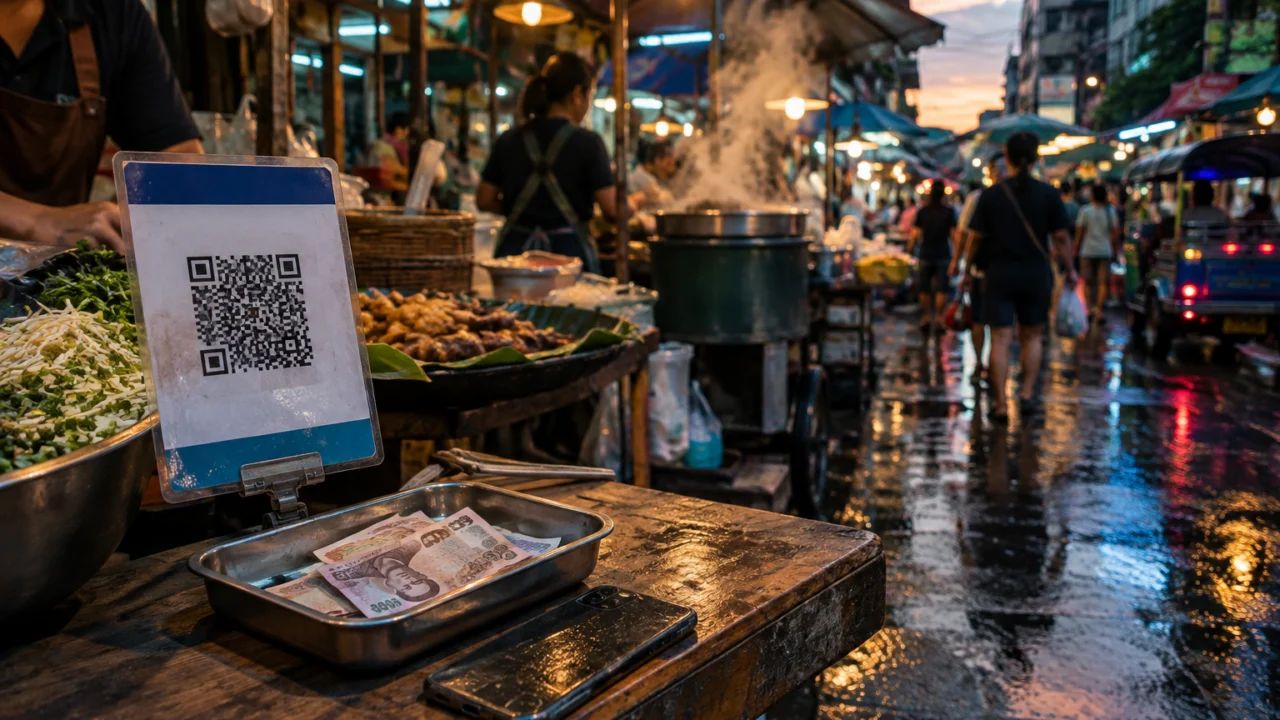
Second, the app converts the balance into Thai baht. Third, the traveller scans the merchant's PromptPay QR code and confirms the amount in baht.
That last step is where the design matters. Merchants receive only baht, so the crypto leg stays entirely with the tourist. The shop never holds digital assets, never manages a wallet and needs no crypto account to accept the payment. From the cashier's side, the transaction looks like any domestic QR transfer.
Why WORPT runs inside an SEC sandbox after the 2022 ban
The Thai SEC banned crypto firms from promoting digital assets as a means of payment in 2022, which closed the most obvious route for a crypto-to-baht service.
WORPT operates inside the SEC Tourist DigiPay sandbox, a test environment where the regulator allows a restricted experiment. The sandbox runs for 18 months and covers only the tourist use case. It is not a general licence to market crypto for everyday spending.
Baht that a user receives after conversion sits in Wipay's e-money balance. That is a wallet balance, not a bank account, and it is supervised by the Bank of Thailand. For a traveller, the practical difference is that the funds are held as electronic money within a supervised framework, not in a deposit account with a local bank.
Under this arrangement, the money side runs on a separate track from the crypto side.
Registration: passport, personal and travel details, face check
Before the first payment, WORPT asks new users to register with their passport, personal details and travel data. It then runs a facial recognition check.
That check confirms that the person holding the wallet is the person named in the passport, the basic identity control any regulated payment service must run. The step happens before any deposit or QR payment goes through. A traveller who cannot pass it cannot use the service.
Card launch dates: physical Visa on 28 November 2026, virtual in early 2027
Physical Visa cards go on sale on 28 November 2026, according to WORPT's website. Virtual cards follow in early 2027, so anyone travelling to Thailand before then will rely on the PromptPay QR route. The two methods differ in where they work. A WORPT card works wherever Visa is accepted, including hotels and shops that never display a QR code. The QR route works wherever a PromptPay code is shown, which is common at street stalls, markets and small restaurants across the country. Travellers should check which method their usual merchants accept before they arrive.
PromptPay as the national QR system behind the payment
PromptPay is Thailand's national instant payment system, best known to most readers as a QR payment system. It launched in 2016 and lets anyone pay a merchant by scanning a QR code, with no card terminal and no cash handed over the counter. The network is estimated at more than 6 million merchants, a figure to confirm against the latest official data before publication. For a tourist paying with WORPT, the steps are simple: scan the shop's QR code, enter the amount in baht, and confirm. The merchant receives the money the same way a local customer's payment would arrive.
Bhutan and Brazil: how other markets handle crypto payments
Bhutan offers one of the broadest setups. Through Binance Pay, combined with DK Bank, users can pay with more than 100 cryptocurrencies by scanning a QR code. Brazil takes a different route. There, Pix, the national instant payment system, can be reached through Binance Pay, and RedotPay and WanderWallet are further options. Each scheme runs under its own rules. So the two models are best read as product features, not as proof of how well either works for travellers.
What a tourist should check before paying with crypto
Compare two prices before paying: the rate in the WORPT app and the baht total on the till. Any gap is part of your real cost. Ask the merchant to confirm the baht amount, since the rate can move between opening the QR and settlement.
Add up every fee, including the deposit, the conversion and any card charge. And convert each into baht for a 1,000 baht purchase.
Then compare the total with paying by card in Thailand from your home account, where your bank may add its own foreign transaction charge.
Finally, check the daily and monthly limits in the app, and read your home bank's rules for card transactions abroad. A declined payment at the till wastes time, so know the ceiling before you need it.
Frequently asked questions about paying crypto in Thailand
Can a tourist pay crypto directly at a shop?
Not in the sense of sending USDT straight to the till. The shop receives baht only. You convert in the WORPT app before you scan the PromptPay QR code. So the merchant sees an ordinary baht payment and never handles crypto.
Is a Thai bank account needed?
Check the registration terms on WORPT's site before you sign up, since requirements can change. Registration asks for your passport, personal and travel details, and a face check, so have those documents ready before you travel.
Which coins are supported?
USDT and USDC are the stablecoins confirmed for WORPT, both pegged to the US dollar.
Any other coin needs checking on the WORPT site before you deposit it, because supported assets can change. Check the exact ticker in the app, since similar names can refer to different tokens.