Brazil Cancels a Fintech Licence Tied to Illegal Betting: The A55 Case

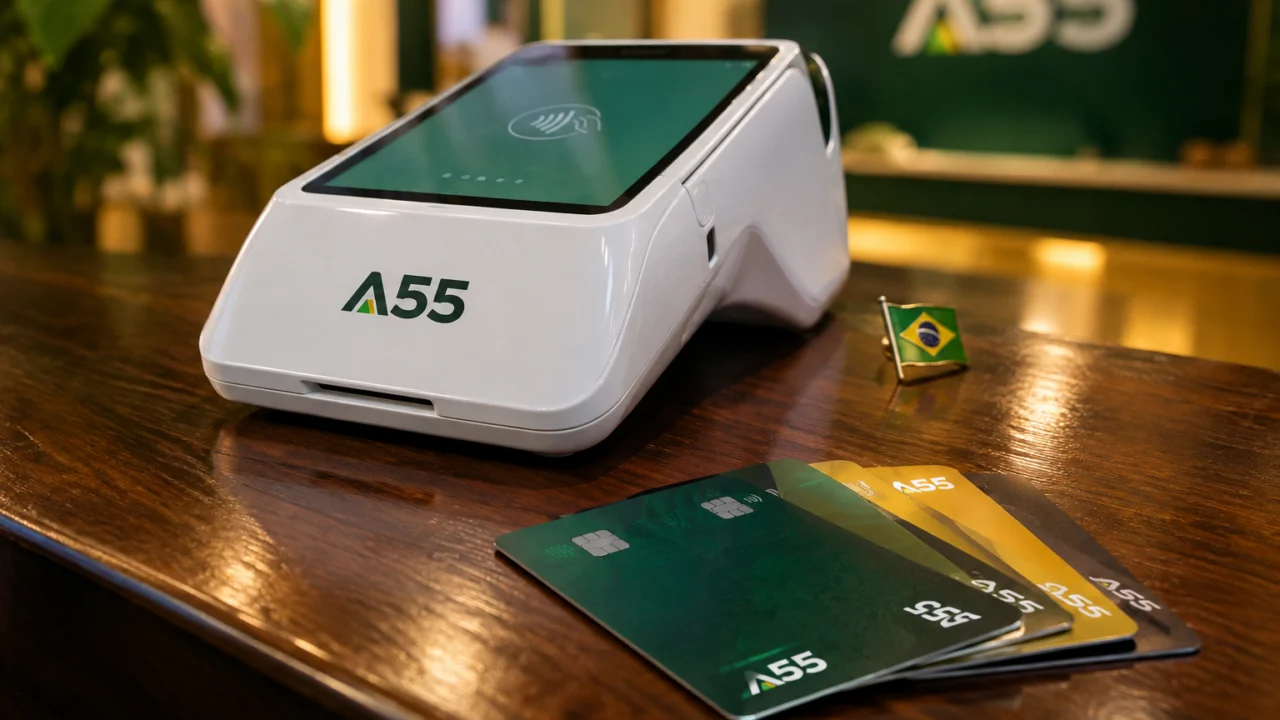
Brazil's central bank cancelled the licence of A55, a credit company whose Pix payments were tied to illegal betting. The legal ground is narrow. Yet the case shows how illegal betting money can move through ordinary payment rails. This piece covers the legal basis, the money trail and what the decision means for payments compliance teams.
Central Bank cancels the A55 credit company licence
The Central Bank of Brazil (Bacen) has cancelled the operating licence of A55 Sociedade de Crédito Direto, a licensed non-bank lender. The move rests on article 23, item I of CMN Resolution 4.970. That provision allows cancellation when a company does not habitually practise the activity its authorisation covers. A sociedade de crédito direto, or SCD, can extend credit and issue loans without being a bank. Still, it sits inside the regulated financial system. Losing that status cuts a firm off from the lending and payment activities the licence allows. That is why the decision matters beyond one company.
A55 disputes the outcome. The company says the decision is not final and can still be appealed. It also says the Bacen procedure began before Operation Azzardo, the Civil Police of the Federal District probe that brought the case into public view. A55 has ten days to appeal.
For compliance teams, the timing matters most. If the administrative process started before the police operation, the cancellation ran on its own supervisory track beside the criminal case. It was not a reaction to it. Either way, the appeal decides whether the licence loss stands.
What Operation Azzardo uncovered in early November
In early November, the Civil Police of the Federal District launched Operation Azzardo. It targeted an illegal betting network that moved around BRL1 billion, or $169.2 million according to the source text, for unlicensed operators. The sums passed through payment channels that investigators traced back to A55, a fintech operating under a non-bank credit licence.
The scale stood out against the company's footprint. Bettors' payments for wagers ran through accounts that did not match a credit business's normal activity. Police mapped those flows across several operators at once.
Investigators did not stop at the betting sites themselves. They followed the payments to the intermediaries that collected and moved them.
For compliance teams, the operation shows how an illegal betting book can sit inside ordinary payment rails. Pix transfers settle in seconds and look the same whether the payee is a shop or a bookmaker. So police focused on the pattern of receipts and onward transfers, not on any single payment.
Why Bacen cited lack of habitual practice
Bacen's stated ground is article 23, item I of CMN Resolution 4.970. That rule lets the Central Bank cancel an authorisation for "lack of habitual practice of the activity the authorisation covers." In plain terms, a credit company must carry on the lending business it was licensed to do. If it does not, the licence can be withdrawn, whatever else the company may be doing.
Valor Econômico reports the decision from the Diário Oficial da União, the official gazette where the Central Bank publishes its notices.
On that reporting, the case rests on the habitual-practice rule, not on a finding of fraud or criminal liability.
A55 disputes the timing. The company says its licence procedure was already under way before Operation Azzardo. If that holds, the operation did not trigger the cancellation. Nor should the decision be read as a direct result of the police action. The dispute over sequence may matter as much as the legal ground.
How bettors paid through Pix and where the funds went
Pix, Brazil's instant payment system run by the Central Bank, was the rail at every stage. A bettor opened a QR code generated by the platform and scanned it. The money went to an account held by A55, which received it as an ordinary Pix transfer. Within the same settlement cycle, the funds moved out of A55. They went to accounts belonging to businesses with no apparent link to betting. Investigators found the recipients included a psychosocial care clinic, a tarot shop and a set of shell companies. Those firms were used to layer the money. That made the link between the bettor's payment and the illegal operator harder to trace.
For a compliance team, a regulated payment institution can look clean at receipt. Its outflows may tell a different story. Transfers to unrelated merchants were the pattern that drew attention.
The wider crackdown: 100 companies and BRL3.48 billion frozen
The wider Operation Azzardo action went beyond A55. According to the Civil Police of the Federal District, the registration of 100 companies was suspended. That stops them operating as legal entities while investigators continue. Police also froze the accounts and assets of 64 individuals and 120 legal entities, totalling BRL3.48 billion. That figure shows how far the money flows reached beyond the single fintech at the centre of the case.
A freeze this size touches banks, payment institutions and credit companies that may have handled transfers for the same network. That can happen even without a direct link to betting. Firms with accounts for gaming or affiliate counterparties should check whether any customers appear on the Civil Police's list.
How large the illegal betting market is
A study by LCA Consultores, "Sizing and Combatting the Illegal Betting Market in Brazil", estimates that illegal operators took between 38% and 44% of online bets in the first half of the year, as reported in the source text.
The range matters for one reason. Illegal operators were not a fringe presence. Between roughly two in five and nearly half of online bets went to firms outside the licensing system. The figure covers online bets only. It gives no total betting volume in reais, and it should not be multiplied into one.
The licensed market ban and the enforcement debate
Brazil has since banned the licensed betting sector. Regulated operators once gave the state a clear list of companies to supervise. They are no longer part of the legal market. The enforcement problem shifts as a result. Authorities now face a market where every operator is, by definition, outside the rules. The only visible players are those police or the central bank have already named.
Industry bodies took the argument to the Supreme Federal Court (STF). Their concern is that removing licensed operators weakens the ability to separate lawful activity from illegal activity.
Enforcement gets harder when the lawful benchmark disappears. The court has not settled the question. The debate sits alongside the A55 case, not inside it.
For payment compliance teams, the practical lesson is narrow but urgent. A Pix flow tied to a betting merchant can no longer be judged by whether the merchant looks legitimate. Teams should check every counterparty against current licence status and treat a payment routed through a non-bank lender with no betting authorisation as a red flag.