MGM China Dividend: Why HKD2.74 Billion Is Flowing to MGM Resorts as Branding Fees Rise

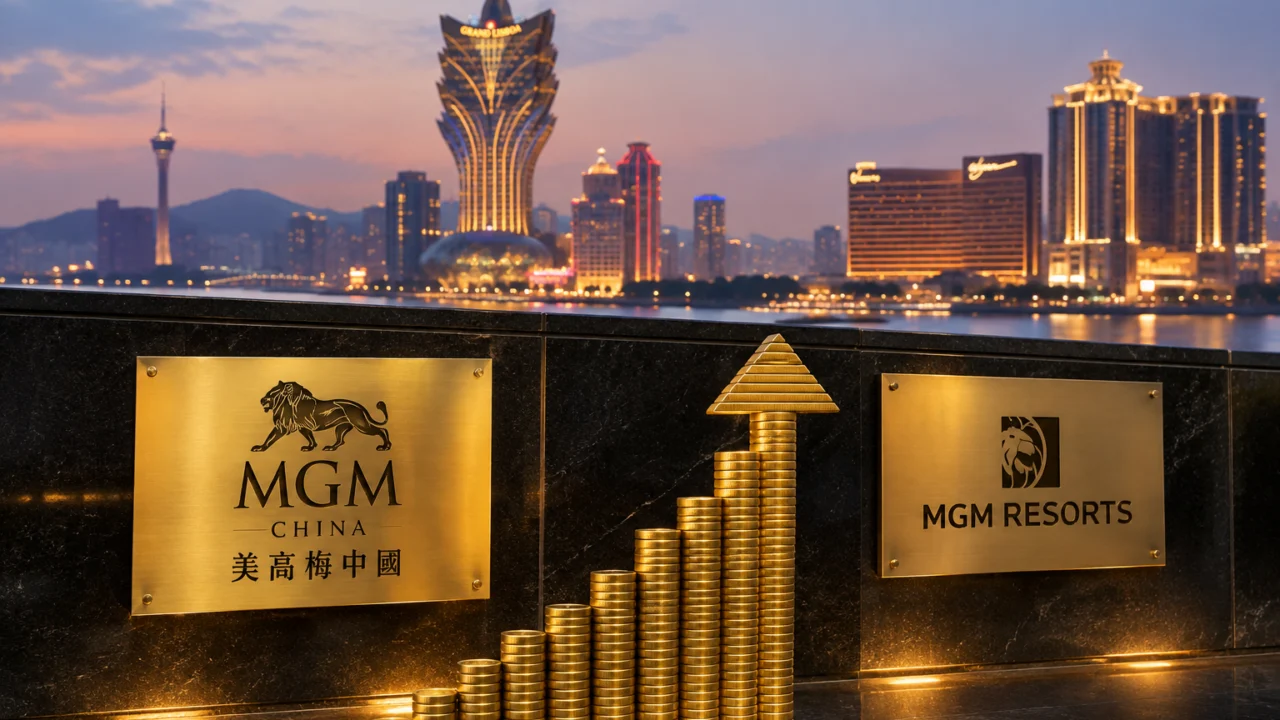
The MGM China dividend sends about HKD2.74 billion to shareholders. MGM Resorts receives about HKD1.54 billion, and branding fees keep climbing. Here are the dates, the figures and what the cash means for the parent company.
How much cash is MGM China returning, and when does it arrive?
MGM China has declared a special dividend of HKD0.722 per share, according to its filing with the Hong Kong Stock Exchange. The total comes to about HKD2.74 billion. As the majority shareholder, MGM Resorts receives about HKD1.54 billion of that sum, roughly US$200 million. Shareholders on the register as of 9 December get the money, and it is paid on 18 December. A special dividend is a one-off payout on top of the regular distribution. It does not signal a change in the routine payout schedule.
What MGM Resorts says about the payout
Bill Hornbuckle, chief executive of MGM Resorts, said the cash return "is a reflection of its outstanding performance and operating strategy." The statement places the payout in the context of earlier years. It also shows that distributions from MGM China have already reached about US$260 million so far this year. For a parent company that relies on the Macau unit for much of its cash, that steady flow matters.
Why branding fees are squeezing the Macau unit
The branding fee is what MGM China pays its parent to use the MGM name. The fee is calculated as a share of the unit's revenue. So every increase in the rate comes straight out of the Macau operation's cash. From 1 January 2026 that royalty doubled, rising from 1.75% to 3.5% of adjusted monthly net revenue. The change is large in practice. MGM China paid US$122.8 million in branding fees in the first nine months of 2026. That already sits well above the US$78.1 million it paid across the whole of 2025. A higher rate applied to a revenue base that keeps growing explains the squeeze. The parent collects more each month.
These payments are not a one-off charge. They form a standing cost that sits above the line on the Macau unit's books. Each quarter the fee rises with revenue. So a strong quarter for the casino floor also means a bigger transfer to MGM Resorts. That arrangement gives the parent a steady income stream. It also leaves the subsidiary with less room to absorb a soft patch in gaming demand.
How the fees show up in third-quarter earnings
Third-quarter results show the fee increase in the numbers that matter most to investors. MGM China's segment adjusted EBITDAR fell 7.0% year on year to US$264.0 million, according to the company's update. EBITDAR stands for earnings before interest, tax, depreciation, amortisation and rent. It is a profit measure that strips out financing and property costs. It shows how much the casino operations themselves earn.
The drop matters because branding fees sit above that line. They added US$22 million to costs compared with a year earlier. That sum is large enough to absorb much of the operating gain the business would otherwise have reported. Revenue held up well. But the extra fee took a visible bite out of profit.
What the cash means for MGM Resorts
Long-term debt stood at about US$5.67 billion on 30 September. That is down 9.0% from US$6.23 billion at 31 December 2025. The reduction matters because the parent carries the debt, and cash from its Macau unit is one way to lower it further. The roughly US$200 million from the special dividend is a meaningful sum against that balance. Still, it is a single payment rather than a recurring source of cash.
MGM Resorts decides where the money goes once it arrives. Capital is needed for projects such as MGM Osaka, due to open at the end of 2030. A large integrated resort takes years of spending before it earns anything. Cash that arrives now can fund early commitments. Whether the parent uses it for debt reduction or for construction is a choice the company has not tied to a specific allocation.