Card Rip Goes B2B: How Grail Network Supplies Operators With 150,000 Collectible Cards

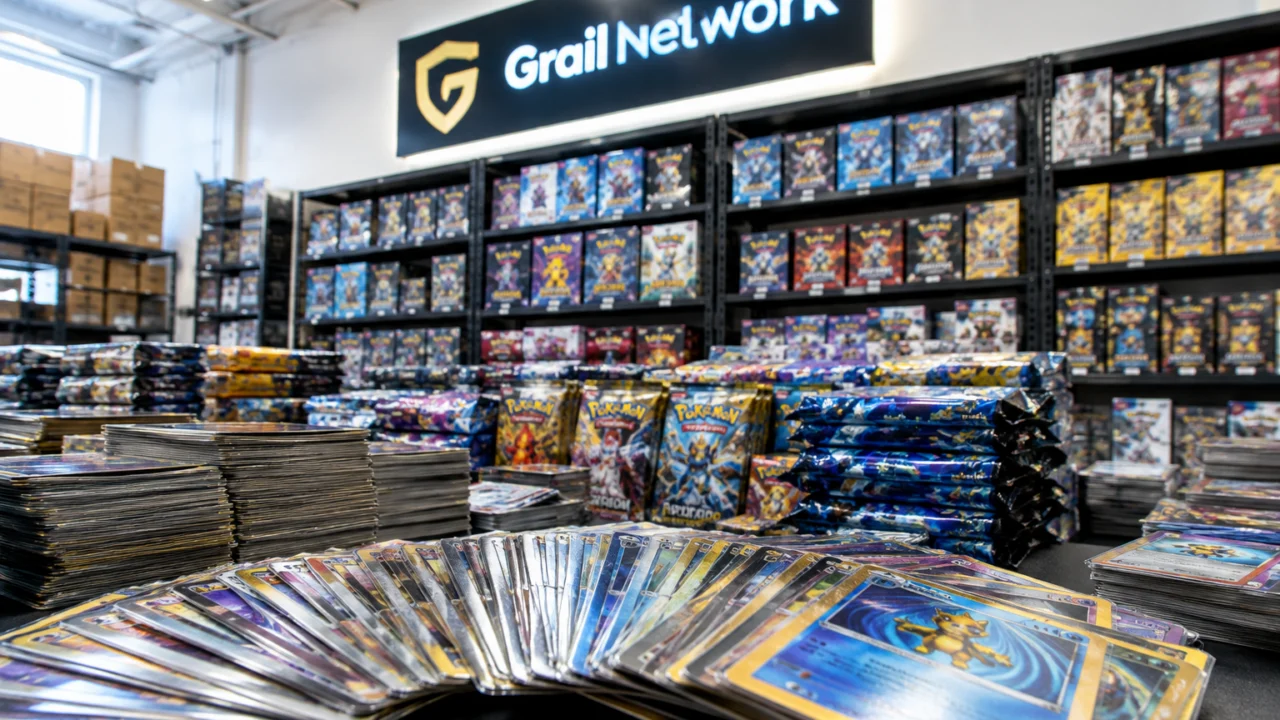
150,000 collectible cards, valued at $20 million by founder Shalom Meckenzie, now stock a B2B platform for card rip operators. The open question for regulators is whether pack openings with a random element fall under gambling law.
Grail Network launch: stock, founder and the SBTech link
Grail Network launches with 150,000 collectible cards, which founder Shalom Meckenzie values at $20 million, according to iGaming Business. Meckenzie founded SBTech in 2007, and the company merged with DraftKings in 2020. The platform does not sell to players. It supplies operators who run card rip products, which open packs with an element of chance.
How the supply model removes inventory risk for operators
Grail Network removes the most expensive part of running a card rip program: owning the stock. An operator does not buy cards, store them or insure its own inventory. The platform supplies the product. So the operator's exposure is limited to the mechanics it chooses to run on top of that supply. The range is broad. It covers Pokémon, Magic: The Gathering and Yu-Gi-Oh! Alongside basketball, baseball, football and American football cards. The flagship item is a 1999 Pokémon Base Set 1st Edition Holo Charizard, which Meckenzie bought at auction for $1.1 million. Few operators could carry a single card of that value on their own balance sheet, which is the point of the model.
Why card rip draws the attention of regulators
Card rip works like a sealed pack sold at a fixed price. The buyer pays first and learns the contents only when the pack is opened. So the purchase carries the same basic structure as a stake placed before an uncertain outcome. The contents are random, and no two packs are guaranteed to hold the same value.
The value spread is what makes regulators look twice. A single card can carry a high resale price. And a pull of that card turns an ordinary purchase into something that resembles a prize with a cash value. In the Grail Network model, the flagship card is the 1999 Charizard that Meckenzie bought at auction for $1.1 million. Pulls of cards like that are rare, but the rare hit is the point of the format.
Critics point to the resemblance to betting mechanics: pay, then receive a random outcome, with the payout depending on chance. Supporters answer that cards keep a resale market and the buyer owns a physical item. The UK Gambling Commission has not classed the format as gambling, so the debate remains open.
The UK Gambling Commission and the Pokémon debate
On 18 November, Lord Foster, chair of the Peers for Gambling Reform group, urged the UK Gambling Commission to bring Pokémon cards under the Gambling Act. The request treats card rip as a gambling-style product that should fall within the regulator's remit. Acting chief Sarah Gardner rejected that reading: the Gambling Act, she said, does not extend to trading cards. The exchange is short, but it shows exactly where the dispute sits. It is not about how card rip is marketed or how much a Charizard is worth. It is about whether a trading card can be classed as a gambling product at all. Until the regulator says otherwise, that question remains open. And operators on borderline markets should not assume the answer is settled in their favour.
What the platform means for operators on borderline markets
Operators working in markets with unclear rules need to check, before launch, whether card rip counts as gambling under their licence terms. A licence written for casino games or sports betting may not mention trading cards at all, and that silence is the risk. Grail's supply model takes purchasing, storage and insurance off the operator's books, which lowers the cost of entry. It does not answer the regulatory question. Investors and compliance teams should follow the UK debate closely, since a ruling there could shape how other regulators treat the format.
FAQ
Does the UK Gambling Commission currently treat card rip as gambling?
No. Acting chief Sarah Gardner said the Gambling Act does not extend to trading cards, which means the regulator has not classed card rip as gambling so far. Lord Foster's request to bring Pokémon cards under the Act is a call for action, not a decision.
How does Grail Network's supply model work for an operator?
According to iGaming Business, the operator does not buy, store or insure the cards itself. Grail Network supplies the stock, which includes Pokémon, Magic: The Gathering, Yu-Gi-Oh! And sports cards for basketball, baseball, football and American football. The operator's exposure is limited to the mechanics it chooses to run on top of that supply.
Is the $20 million stock value confirmed?
The $20 million figure for the 150,000-card stock and the $1.1 million paid for the Charizard are Meckenzie's own statements, as reported by iGaming Business. They are not independently verified valuations.
Why does the SBTech connection matter for this platform?
Meckenzie founded SBTech in 2007, and the company merged with DraftKings in 2020. That background is the reason the launch draws attention from people who follow gambling operators and regulators. The link describes the founder's track record, not Grail Network's licensing status.