Dutch Gambling Advertising: Which Sponsor Branding Clubs Can Still Use After Inter Milan and Club Brugge Dropped Betsson

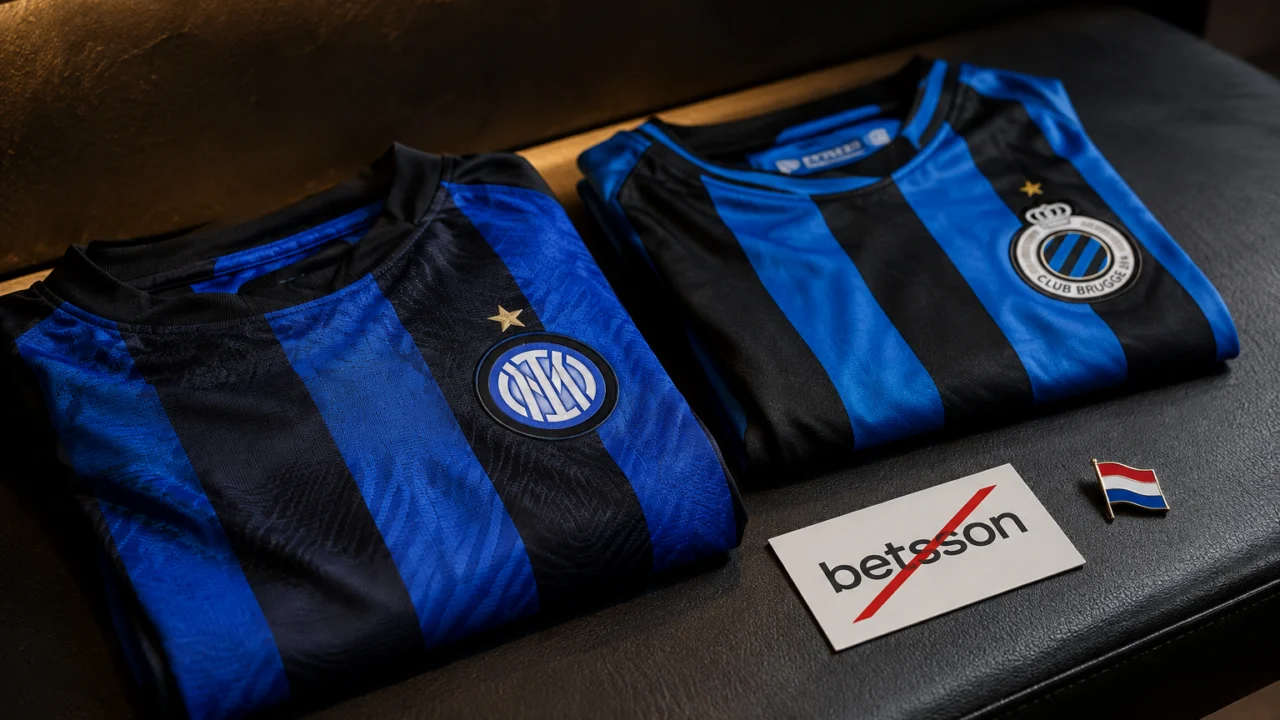
Dutch gambling advertising rules now reach shirt sponsors. Inter Milan and Club Brugge dropped Betsson branding after a Ksa warning, and this guide shows what clubs can still display.
What happened in Eindhoven and Rotterdam
Club Brugge played PSV at the Philips Stadion in Eindhoven with Betsson branding that used different wording from its usual sponsor line. Many clubs assume a renamed sponsor is safe, but the regulator did not accept that. The alternative was still close enough to the operator's name that Ksa, the Netherlands Gambling Authority, treated it as promotion of Betsson's gambling services.
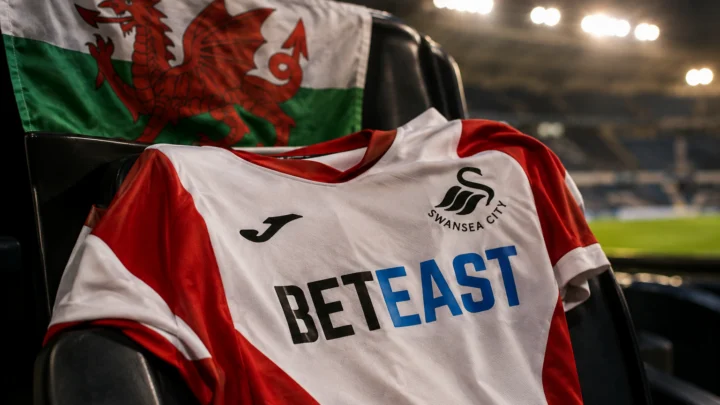
Inter Milan took a different route. For its match against Feyenoord at Stadion Feijenoord in Rotterdam, the club played without a shirt sponsor at all, after talks with the Dutch regulator. The iGB report describes both clubs changing their branding after Ksa's objection, which is the point to hold onto: the warning reached the pitch, not only the operator's marketing team.
Why 'Betsson.Foundation' was rejected
Ksa, the Dutch regulator, did not accept Betsson.Foundation as a clean alternative to the operator's own name. According to the iGB report, the regulator found the wording not distinct enough from Betsson itself. And concluded that it could still promote Betsson's gambling services. For a club, the practical problem is that a shirt or stadium name carries the operator's brand into the match broadcast, whatever the sponsor's intent.
The clubs took a different view. Their argument was that Betsson.Foundation refers to a non-profit. So the name was meant to point fans toward charitable work rather than toward the gambling business.
That reading is plausible on paper, since a foundation is a recognisable legal form in many markets. The regulator's test, however, was not what the name was meant to suggest but whether a Dutch viewer would link it back to Betsson's betting products.
That gap explains the outcome. Sponsorship is where the name test bites hardest, because it is paid, visible and repeated across a season. A sister name therefore has to stand apart from the operator's gambling brand in its wording and its presentation, not only in the intention behind it. A foundation name that still sits on the same shirt as the operator's logo, in the same colours, gives the regulator little room to accept it.
The Dutch rules behind the warning
Under the rules described in operator reporting, an operator without a Dutch licence may not promote its services in the Netherlands. The restriction applies whether or not the same company holds a licence in another European market. For a brand without a Dutch licence, that means no visible promotion aimed at Dutch players.
The restrictions reach beyond banner ads and television spots. They cover untargeted advertising, meaning promotion that is not aimed at a specific audience but still reaches Dutch viewers, and they cover sponsorship. For a football club, that matters because a shirt or stadium name is sponsorship that every supporter sees at every home match. A visiting or home club in the Netherlands can therefore find that a sponsor's name on its kit or on the ground falls under the rule, even though the club itself is not in the betting business.
Ahead of the season, the regulator did not leave clubs to work this out mid-season. According to operator reporting, the Dutch Gambling Authority, Ksa, worked with the KNVB, the Royal Dutch Football Association. And notified foreign clubs before the season started. Foreign clubs playing in the Netherlands were therefore on notice before any Dutch fixture was played, which is the warning that preceded the matches in Eindhoven and Rotterdam.
The UK move
The Department for Culture, Media and Sport (DCMS) has consulted on secondary legislation under the Gambling Act 2005 that would make it a criminal offence to promote unlicensed gambling operators in Great Britain. Until now, the Act has mainly targeted the operators themselves. The proposal shifts part of the exposure toward whoever carries the promotion, which changes the risk for any sponsor that does not hold a GB licence.
Clubs, leagues and venues would all fall within reach, since a shirt deal, a stadium board or a matchday activation can each count as promotion. That makes the Dutch dispute more than a foreign story for British readers.
A kit deal that passes in Eindhoven could still be a problem at home.
Compliance teams should not wait for the final wording to start comparing. The Dutch test turns on whether branding points back to a licensed gambling service. And the UK text will need to be read against that same question. Where the two tests differ, the stricter one should set the planning baseline.
The Dutch ad ban debate
The proposal for a near-total ban on gambling advertising in the Netherlands has split the market. The plan would close most of the channels operators still use to reach Dutch players. And critics say it misses the real problem. Justin Franssen, partner at Franssen Tolboom, argued that the approach is aimed at the wrong target: "there is no evidence that [a total ban] will succeed."
His objection points at enforcement rather than volume. A ban on licensed operators does little to stop advertising from companies that have no Dutch licence at all. And those firms have no reason to follow Dutch rules.
VNLOK, the Dutch gambling trade association, makes the same point with numbers. It says more than 90% of gambling ads on Facebook come from unlicensed operators. When Meta removed only 11% of those illegal ads in May, VNLOK took the platform to court. The association's position is that the rules already on the books would work if platforms were held to them.
For clubs, the outcome decides how much room remains for sponsorship. A near-total ban would leave little space for shirt deals, while a tighter focus on unlicensed operators would keep the licensed market open but demand stricter checks on who sponsors.
What clubs should check
Start with the match calendar. The Dutch warning reached clubs playing away in Eindhoven and Rotterdam. So a club's exposure depends on where it plays, not only where it is based. Before each season, check the licensed-market rules for every country it visits in European competition. And treat any away fixture as a branding decision in its own right.
Next, test any alternative branding against the Betsson.Foundation rejection. Ksa found that name too close to the operator's gambling services, and clubs argued it pointed to a non-profit.
A new name, logo or colour scheme has to stand on its own. And a sponsor's legal team should clear it before it reaches a shirt.
Then notify the regulator early. Ksa contacted foreign clubs before the season. And a club that waits until a match day gives itself no room to change kit or signage. Finally, track the DCMS consultation. If the UK criminalises promotion of unlicensed operators, the same sponsorship logic will reach British clubs, leagues and venues.