Oripa Gambling in Singapore: Why Pokémon Blind Packs Count as Illegal Play

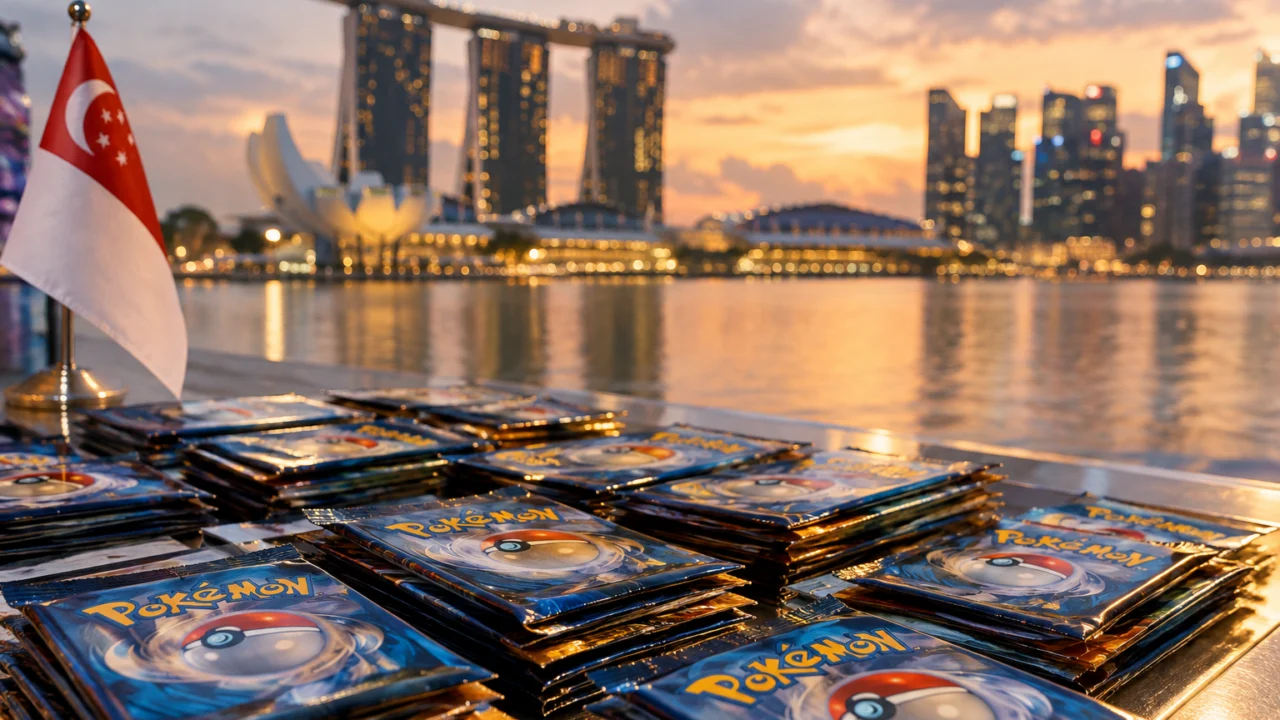
This piece explains oripa gambling. It covers what Pokémon blind packs are and how an unlicensed site sold them to Singapore users with a prize buyback. It also looks at what the Gambling Control Act says about influencer promotion. Read it if you collect cards or follow gambling ads.
What is an oripa?
An oripa is a Japanese lottery built on blind packs. Buyers pay a fixed price for a closed pack. The contents stay hidden until it is opened. The operator decides what goes into each pack, so the buyer never sees the cards in advance.
The operator makes money by repacking. It collects cards of widely varying value and spreads them across packs. The pool then sells for more than the cards are worth at market price.
Some packs hold a rare card that anchors the price. Most hold common ones.
The Pokémon version follows the same structure. A buyer pays a fixed price for a blind pack with no way to know whether it contains a rare card or a common one. The chance of a valuable pull is what the buyer is paying for.
How the platform sold packs to Singapore users
The platform's sales page listed packs priced from 100 to 1,200 credits, and each credit was sold at $1. A buyer chose a pack size, paid, and received the matching credits in the account. Payment ran through PayNow, the Singapore bank transfer system. The purchase looked like an ordinary local transfer to the user.
Credits in hand, the player opened a blind pack. The card stayed hidden until then. The site then offered a second option: exchange the prize back for credits instead of keeping the card. That buyback mechanic turned each pack into a sale with a guaranteed return route. The credits could be spent on further packs.
Why the buyback mechanic counts as gambling
The buyback turns an oripa from a card shop into a game of chance. The Straits Times report ties the case to the Gambling Control Act, the statute that governs gambling in Singapore. The buyback also brings the platform within the Act's reach. A player who opens a pack and receives a card can sell it back to the site for platform credits. Those credits can be spent on further packs, so the card carries a cash-equivalent value inside the site. A prize that converts into currency is a prize in the legal sense.
Buyers also cannot see the contents before opening. They pay for a chance at a valuable card, not for one they have seen. A normal card shop lets a buyer inspect the product, compare its price with the market, and decide before paying. That is what sets an oripa apart.
Influencers and the campaign
Starting in September, at least ten influencers promoted the platform to Singapore audiences. Most of them were Pokémon collectors with channels built around card openings. Their posts followed a shared pattern: a pack opened on camera, a reaction to a pulled card. And a link to the sales page.
Part of the campaign ran through DU Media, an agency with three participants. The agency lined up creators, supplied scripts, and set the timing of the posts so that several videos went live close together. Its role is the reason the promotion looks like one campaign rather than ten separate enthusiasts.
Each creator filmed the posts differently. One unboxed a pack in a bedroom and held a high-value card up to the lens. Another stacked several packs on a table and counted down to the reveal. A third filmed a short clip from a car, talking about the chance of a big pull. All of them showed the prize. None showed the buyback price. Each also pointed viewers to the platform's purchase page.
Penalties under Singapore law
Under the Gambling Control Act, a first offence for illegal gambling carries a maximum of 7 years in prison and a fine of $500,000. A repeat offence raises the ceiling to 10 years and $700,000. Those are maximums, and courts set the actual sentence case by case. But the range makes clear that the law treats organised gambling as a serious crime rather than a regulatory slip.
Advertising is a separate exposure, and it matters most for influencers. Promoting illegal gambling can draw a fine of up to $20,000. A creator who posts a pack-opening video with a referral link is not a bystander to the operator's activity.
A sponsored post falls under the same statute. So it can create liability even when the creator never touches the platform's money.
The operator faces years in prison. A promoter faces a fine. Yet the law does not treat the two roles as unconnected. A creator who knowingly drives Singapore users to an unlicensed platform takes part in the offence.
What comes next
The regulator is preparing the terms that will govern these rules, and details are promised by the end of the year. That timing matters less than what the terms will contain. Readers should look for how the buyback mechanic is treated, since a prize returned for in-game credits is the feature that turns an oripa into a wager. The advertising rules matter just as much, because they decide whether promoters who post about packs can be held to account. Until the terms are published, the penalties already in force remain the reference point. A first offence carries up to 7 years' imprisonment and a $500,000 fine. Unlawful advertising can draw up to $20,000.